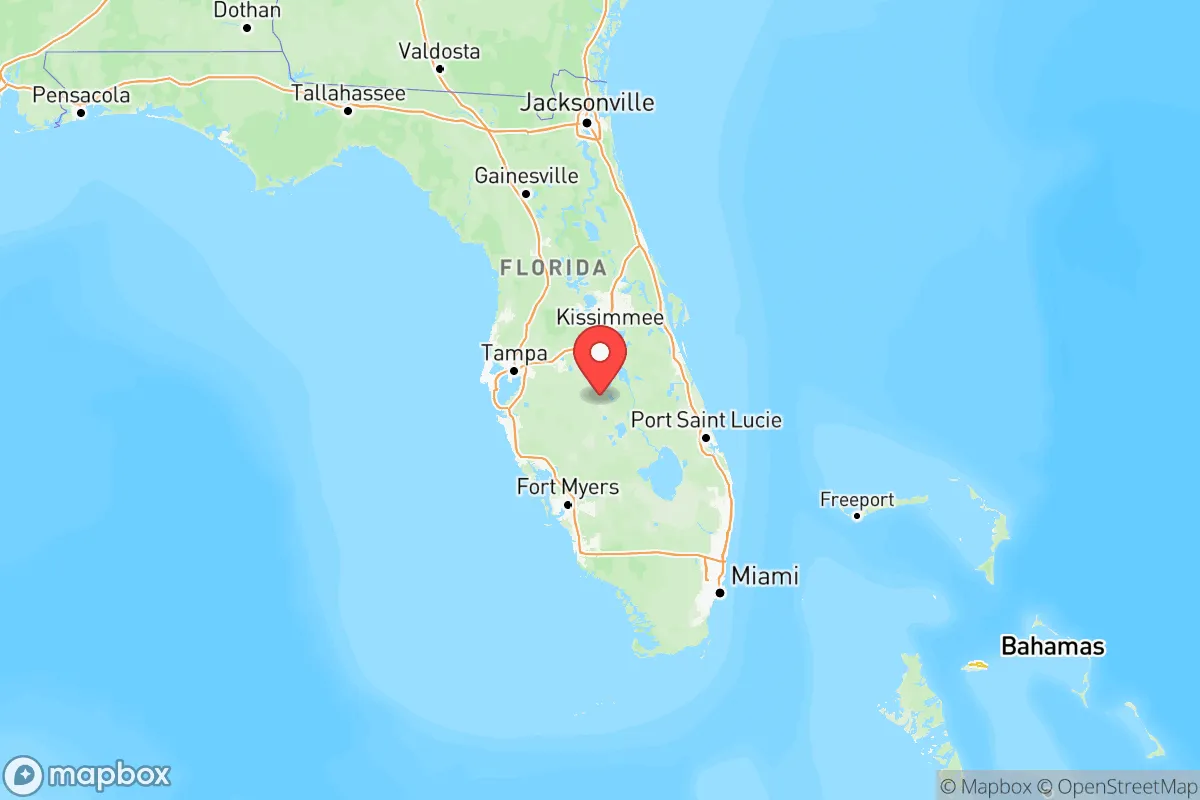
Photo: Wikipedia
Demographics of Florida
Affluence Level in Florida
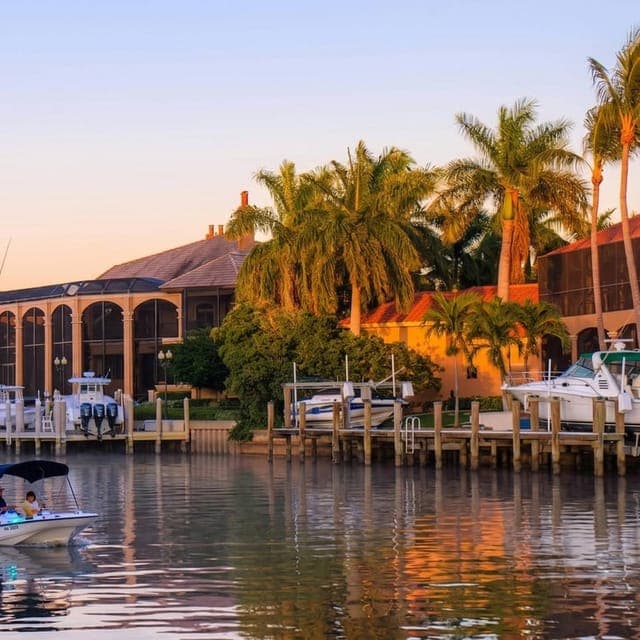
A wealthy area with high-earning, well-educated households. Incomes, home values, and educational attainment meaningfully outpace national averages.
People of Florida
Florida’s 21.9 million residents form one of the most demographically diverse and rapidly changing populations in the United States, shaped by centuries of migration from the American South, the Caribbean, Latin America, and increasingly, Asia and the Indian subcontinent. The state is a majority-minority state where non-Hispanic whites make up 51.4% of the population, while Hispanic residents account for 26.7%, Black residents 14.8%, and East/Southeast Asian and Indian communities together represent 2.8%. This is a place defined by its transient, growth-oriented character — a destination for retirees, young families, and immigrants seeking economic opportunity, with a cultural identity that blends Deep Southern roots with a distinctly Latin and Caribbean flavor.
Settlement & growth (pre-1960)
Long before European contact, Florida was home to numerous Native American nations, including the Timucua in the north, the Apalachee in the Panhandle, and the Calusa in the southwest. Spanish explorers arrived in the 1500s, establishing St. Augustine in 1565 — the oldest continuously occupied European settlement in the continental United States. Spanish control lasted until 1763, when Britain took over, only for Spain to regain it in 1783 before ceding it to the United States in 1821. During the Spanish and British periods, the indigenous population was decimated by disease and conflict, and the Seminole people — a coalition of Creek refugees and escaped slaves — formed in the interior. The Seminole Wars of the 1800s forcibly removed most of them to Oklahoma, though a remnant remained in the Everglades.
Florida’s American-era settlement began slowly. After statehood in 1845, the population was concentrated in the northern Panhandle and along the St. Johns River, with Tallahassee and Jacksonville emerging as early centers. The economy was based on cotton and timber, worked by enslaved African Americans. By 1860, nearly half of Florida’s population was enslaved. After the Civil War and Reconstruction, the state remained poor and rural, with a population of just 528,000 in 1900.
The first major growth wave came in the 1880s and 1890s, driven by railroad expansion and the citrus industry. Henry Plant and Henry Flagler extended rail lines down the Atlantic and Gulf coasts, opening the peninsula to tourism and agriculture. Flagler built St. Augustine’s luxury hotels and pushed the railroad to Miami, which was incorporated in 1896. This era attracted northern investors, Midwestern farmers, and a wave of Bahamian immigrants who settled in Miami’s Coconut Grove and Key West. The 1920s land boom brought a speculative frenzy, drawing thousands of new residents from the Northeast and Midwest, but the bust and the 1926 hurricane collapsed the market.
World War II transformed Florida permanently. The state became a major training and staging ground, with military bases in Pensacola, Tampa, and Orlando. After the war, the defense and aerospace industries boomed, particularly around Cape Canaveral and Melbourne. Air conditioning, invented in the 1930s but widely adopted after the war, made year-round habitation comfortable. The result was a massive Sun Belt migration: Florida’s population grew from 1.9 million in 1940 to 4.9 million in 1960. These new residents were overwhelmingly white, from the Northeast and Midwest, and they settled in the newly developed suburbs of Miami, Tampa, and the growing Orlando area. The state’s Black population, meanwhile, remained largely in the rural north and in segregated urban neighborhoods.
Modern era (post-1965)
The 1965 Hart-Cellar Act reshaped Florida’s demographics by opening immigration from Asia, Latin America, and the Caribbean. The most dramatic change came from Cuba. After the 1959 revolution, waves of Cuban exiles arrived, first in the 1960s (the “historic exile” wave) and then again in the 1980 Mariel boatlift. These immigrants concentrated overwhelmingly in Miami and Hialeah, transforming the city into a bilingual, Cuban-dominated metropolis. By 2026, Cubans remain the largest Hispanic subgroup in Florida, but their share has declined as other groups have arrived.
Since the 1980s, Florida has seen rapid growth in Puerto Rican migration (to Orlando and Tampa), Colombian and Venezuelan immigration (to South Florida), and Central American arrivals (to the agricultural interior and urban service economies). The Hispanic population has risen from 12% in 1980 to 26.7% today. At the same time, domestic migration from the Rust Belt and California has continued, with Jacksonville, Tampa, and Orlando absorbing the bulk of new arrivals. These domestic migrants are a mix of retirees, remote workers, and families seeking lower taxes and warmer weather.
The Black population, at 14.8%, has grown more slowly. Historic Black communities in Jacksonville, Miami’s Liberty City, and Tampa’s East Tampa remain, but the state has also seen an influx of Black immigrants from Haiti, Jamaica, and other Caribbean nations, particularly in South Florida. The East/Southeast Asian population (1.8%) is concentrated in Orlando (Vietnamese and Filipino communities) and Tampa (Chinese and Korean communities). The Indian subcontinent population (1.0%) has grown rapidly since 2000, with professionals settling in Tampa, Orlando, and Jacksonville, drawn by the tech and healthcare sectors.
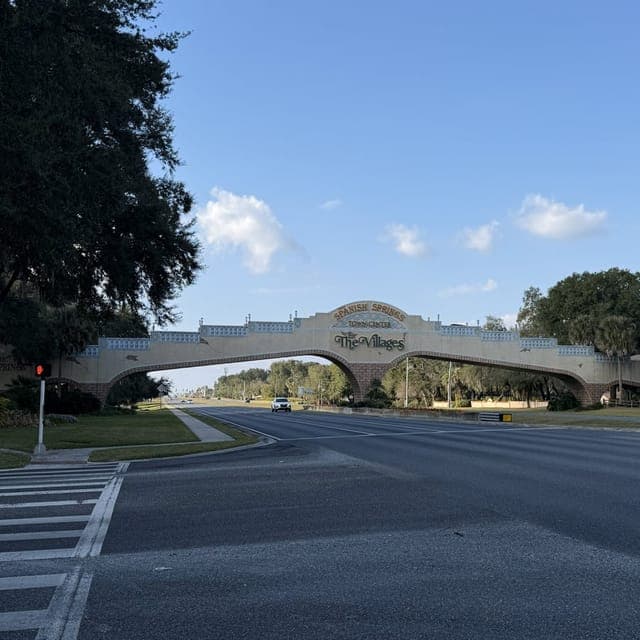
Suburbanization has been the dominant geographic trend. The state’s growth has been overwhelmingly in sprawling, car-dependent suburbs and exurbs — places like The Villages (a massive retirement community), Palm Coast, and Port St. Lucie. These areas are whiter and older than the urban cores, while the cities themselves have become more diverse and younger.
The future
Florida’s population is projected to continue growing at a rapid pace, adding roughly 300,000–400,000 new residents per year. The state is becoming more diverse, but the nature of that diversity is shifting. Hispanic growth is increasingly driven by Venezuelans, Colombians, and Central Americans rather than Cubans, and these groups are dispersing beyond South Florida into the I-4 corridor (Tampa to Orlando) and even into the Panhandle. The East/Southeast Asian and Indian populations are growing from a small base but are expected to double within 15–20 years, concentrated in professional hubs. The non-Hispanic white share will continue to decline, likely falling below 50% by 2030.
Climate change and rising insurance costs may slow growth in coastal areas, pushing new development inland toward Ocala, Gainesville, and the Lake Okeechobee region. The state’s political identity — currently a Republican stronghold — may shift as the Hispanic electorate diversifies and as younger, more liberal domestic migrants arrive from blue states. Culturally, Florida is becoming less “Southern” and more national and global, with a growing emphasis on its role as a hub for Latin America and the Caribbean.
For someone moving to Florida now, the state offers a dynamic, high-growth environment with a diverse population that is still sorting itself out geographically and culturally. The key question is not whether Florida will grow — it will — but whether its infrastructure, housing, and natural environment can sustain the pace. The people of Florida are increasingly young, diverse, and transient, and the state’s identity is being rewritten in real time by the millions arriving each decade.

Most Diverse Cities in Florida
Most Homogenous Cities in Florida
* Values derived from national, state, county, city and local statistics and may differ in a specific area. Last updated: 2026-08-02T10:22:55.000Z
Narrative content on this page is AI-generated and may contain mistakes. Verify any details that matter before acting on them.
ReloMaps may earn a commission from affiliate links at no extra cost to you.

