Political ClimatePolitical Climate in Kaneohe Base, HI
District shown is the primary district for this city’s centroid. Cities may span multiple districts.
Local Political AnalysisPolitical Analysis of Kaneohe Base, HI
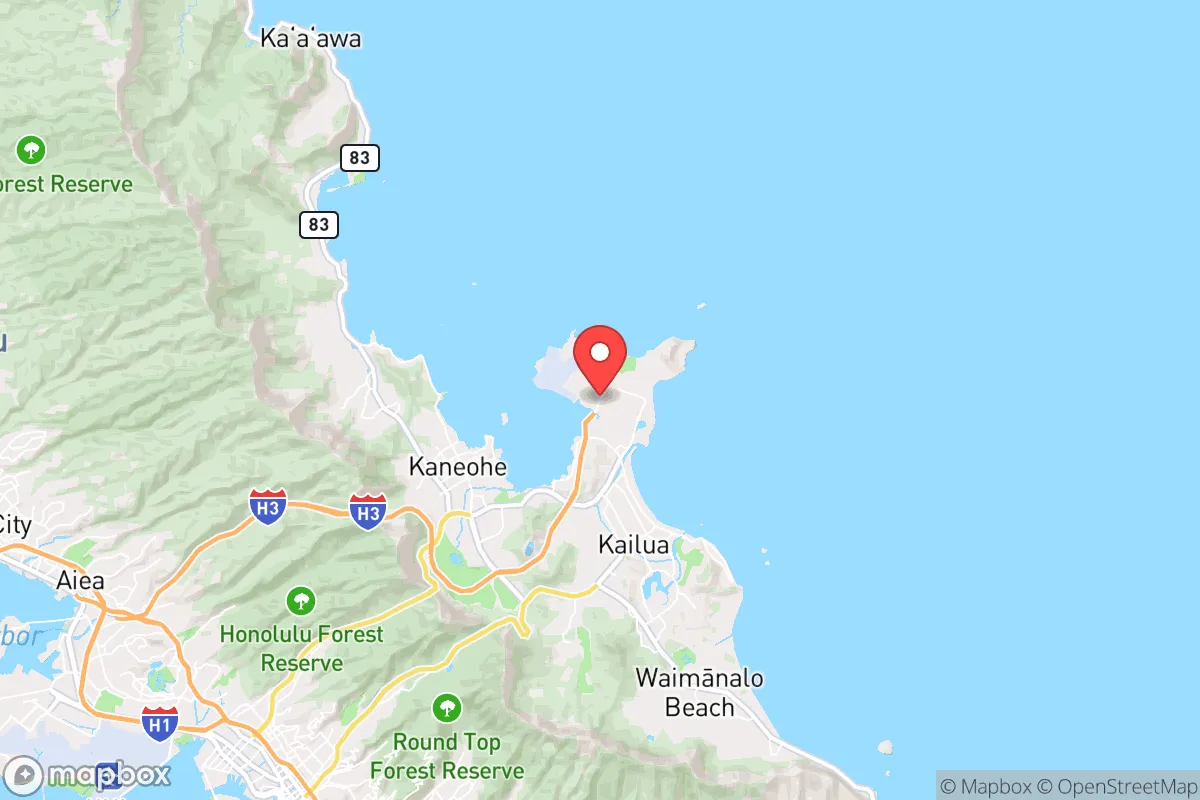
Kaneohe Base, home to Marine Corps Base Hawaii, leans heavily Democratic with a Cook PVI of D+12, but don’t let that number fool you into thinking it’s a monolith. The political climate here is a strange mix of military discipline and progressive drift, and if you’ve been around as long as I have, you’ve watched it shift from a place where personal responsibility and freedom were the default to one where government overreach is creeping in under the guise of “community standards.” The base itself is a federal enclave, so you get a lot of folks who value order and service, but the surrounding Windward Oahu area has been trending left for years, and that’s starting to squeeze the old-school values that made this place livable.
How it compares
Drive 20 minutes south to Kailua, and you’ll find a similar D+12 vibe—organic grocery stores, bike lanes, and a city council that loves new regulations on everything from short-term rentals to backyard chickens. Head west over the Pali Highway into Honolulu proper, and it’s even more progressive, with a mayor who’s pushed vaccine mandates and plastic bag bans that feel like they’re testing how much control people will tolerate. The real contrast is north, toward Laie or Kahuku, where the Mormon and rural influences create a more conservative pocket—think lower taxes, fewer zoning restrictions, and a general “leave us alone” attitude. Kaneohe Base sits in the middle, but the base’s federal status means you’re stuck with whatever Honolulu County decides, and lately, that’s been a lot of new fees, land-use rules, and environmental mandates that hit small property owners harder than the big developers.
What this means for residents
For families living on or near the base, the biggest concern is how much the local government is willing to meddle in daily life. Property taxes have crept up as the county funds more social programs, and there’s a growing push to restrict firearm ownership even for military retirees who’ve carried their whole careers. The school board has also gotten more activist, pushing curriculum changes that prioritize ideology over basics like math and reading—something that worries parents who just want their kids to be able to think for themselves. On the plus side, the military presence keeps some sanity: you’ve still got a strong sense of community, neighborhood watch programs that actually work, and a general respect for the Second Amendment among the base population. But the long-term trend is concerning—every election cycle brings more candidates who see government as the solution to every problem, and that’s a red flag for anyone who values personal freedom.
Culturally, Kaneohe Base is unique because it’s a bubble of federal order in a county that’s increasingly embracing progressive policies. You’ll see “Aloha Spirit” signs everywhere, but that spirit doesn’t extend to letting you build a shed without three permits or park your boat on your own driveway. The base itself is a reminder of what America used to be—self-reliant, patriotic, and respectful of individual rights—but the surrounding area is slowly strangling that with red tape and social engineering. If you’re thinking of moving here, know that you’ll be fighting a rear-guard action to keep your freedoms intact. It’s still a beautiful place to raise a family, but you’ll need to stay politically engaged and vote like your rights depend on it—because they do.

State Political ClimatePolitical Climate in Hawaii
State Political AnalysisPolitical Environment in the State
Hawaii has been a one-party Democratic stronghold for decades, with Democrats holding supermajorities in the state legislature and every statewide office since 1962. The state’s overall partisan lean is roughly D+20 in presidential elections, but that masks a growing conservative undercurrent, especially among Native Hawaiians and rural residents who feel left behind by Honolulu’s progressive machine. Over the last 10-20 years, the Democratic coalition has shifted from a moderate, labor-based party to a more left-leaning, coastal-elite coalition, while Republican registration has stagnated below 30%. However, the 2022 gubernatorial race saw Republican Duke Aiona pull 33% of the vote, and in 2024, Donald Trump improved his margin by 4 points compared to 2020, signaling a slow but real rightward drift in the outer islands.
Urban vs. rural divide
The political map of Hawaii is essentially Honolulu versus everything else. The city of Honolulu and its suburban sprawl—places like Waikiki, Kaimuki, and Hawaii Kai—drive the state’s blue lean, with precincts routinely voting 70-80% Democratic. The island of Oahu as a whole accounts for roughly 70% of the state’s population, so its urban tilt dominates statewide elections. But drive 30 minutes out of Honolulu to the North Shore or the Leeward Coast, and you’ll find more mixed results—areas like Waianae and Kahuku lean conservative on local issues, especially around land rights and fishing regulations. On the Big Island, the divide is even starker: Hilo is a deep-blue college town, while Kona and Waimea are reliably red, with ranchers and farmers voting Republican by 10-15 points. Maui’s upcountry (Kula, Makawao) is a conservative pocket, while Kihei and Lahaina lean left. Kauai is more purple than people think—the rural north and west sides vote Republican, while Lihue and Kapaa are blue. The rural-urban split is real, and it’s widening as Honolulu’s politics become more identifiably progressive.
Policy environment
Hawaii’s policy environment is a mixed bag for conservatives. The state has the highest combined tax burden in the nation, with a 4.4% income tax on the lowest bracket and 11% on the highest, plus a 4.5% general excise tax that hits everything from groceries to rent. Property taxes are low (around 0.3% of assessed value), but the state makes up for it with aggressive regulation. The Hawaii Public Housing Authority and the Department of Land and Natural Resources have near-total control over land use, making property rights a constant battle. Education policy is dominated by a single statewide school district—the only one in the country—which means local control is nonexistent. The state’s Act 163 (2021) mandated ethnic studies and social-emotional learning in public schools, which many parents see as ideological overreach. Healthcare is heavily regulated, with a state-run insurance exchange and a 2019 law that effectively banned short-term health plans. Election laws are among the most restrictive in the nation: Hawaii has no voter ID requirement, same-day registration, and universal mail-in voting, which critics argue undermines election integrity. The Office of Elections has faced repeated audits showing ballot chain-of-custody issues, though no major fraud has been proven.
Trajectory & freedom
Hawaii is trending less free by almost any measure. The state’s Act 2 (2021) effectively banned the carrying of firearms in public places, even after the Bruen decision, leading to a federal lawsuit that is still pending. In 2023, the legislature passed Act 50, which created a “red flag” law allowing family members or police to petition for temporary firearm seizure without a criminal conviction. On parental rights, Act 159 (2022) prohibited schools from notifying parents if a student changes their gender identity or pronouns, a direct blow to family autonomy. Medical freedom took a hit with Act 1 (2023), which mandated COVID-19 vaccines for all schoolchildren, though it was later suspended after public backlash. Property rights are under constant assault from the Land Use Commission, which can rezone agricultural land for development without local input. On the positive side, the state’s Act 40 (2022) expanded school choice through charter schools and the “My Hawaii” education savings account program, though it’s still small. The Hawaii Sovereignty Movement continues to push for greater Native Hawaiian self-governance, which some conservatives see as a check on federal overreach.
Civil unrest & political movements
Hawaii has a long history of civil disobedience, but the flashpoints have shifted. The Thirty Meter Telescope (TMT) protests on Mauna Kea from 2015-2019 were the largest civil unrest in modern state history, with thousands of Native Hawaiians and allies blocking construction. The movement was a rare coalition of left-wing environmentalists and conservative Native rights activists, united against what they saw as government overreach. More recently, the 2023 Lahaina wildfires sparked protests against the state’s emergency response and land management, with some residents accusing the government of using the disaster to push redevelopment plans. The Hawaii Republican Party is small but active, with a strong presence in the Kona-Kohala region and on Molokai. The Hawaii Libertarian Party has gained traction, especially around gun rights and property tax reform. Immigration politics are muted compared to the mainland, but the state’s sanctuary policy (Act 2, 2019) limits cooperation with ICE, which frustrates conservatives. Election integrity remains a hot-button issue: the 2020 and 2022 elections saw over 10,000 ballots flagged for signature mismatches, and the state’s Voter ID law was struck down in 2021 as unconstitutional, leaving no verification system in place.
Projection
Over the next 5-10 years, Hawaii will likely become more polarized rather than flipping red. The in-migration of remote workers from California and the West Coast—especially to Kailua-Kona and Kihei—is pushing the outer islands leftward, while the exodus of native-born residents to cheaper states like Nevada and Texas is draining the conservative base. The Democratic supermajority is unlikely to break, but the party itself is fracturing between moderates (like Governor Josh Green) and progressives (like state Senator Joy San Buenaventura). The Hawaii Sovereignty Movement could gain steam, potentially leading to a constitutional convention or a push for federal recognition of a Native Hawaiian nation, which would upend the current political order. Housing costs will continue to drive political discontent, and a property tax revolt is possible if the state doesn’t rein in spending. The gun rights movement will keep fighting in court, but don’t expect legislative wins. The bottom line: Hawaii will remain a blue state, but the cracks are showing. A conservative moving here should expect to be a minority voice, but there are growing communities of like-minded people in Waimea, Kula, and Hanalei where you can find your tribe.
For a new resident, the practical takeaway is this: Hawaii’s political climate is a trade-off. You get low property taxes and a beautiful environment, but you also get high income taxes, heavy regulation, and a government that often prioritizes progressive social policy over individual freedom. If you’re willing to fight for your rights—whether on gun ownership, school choice, or property use—you’ll find allies in the rural areas and on the outer islands. But if you’re looking for a state where your vote reliably moves the needle, Hawaii is not that place. It’s a beautiful, expensive, and increasingly ideological state where the best strategy is to find your local community and engage at the county level, where real change is still possible.
* Values derived from national, state, county, city and local statistics and may differ in a specific area. Last updated: 2026-05-02T22:44:10.000Z
Narrative content on this page is AI-generated and may contain mistakes. Verify any details that matter before acting on them.
ReloMaps may earn a commission from affiliate links at no extra cost to you.

