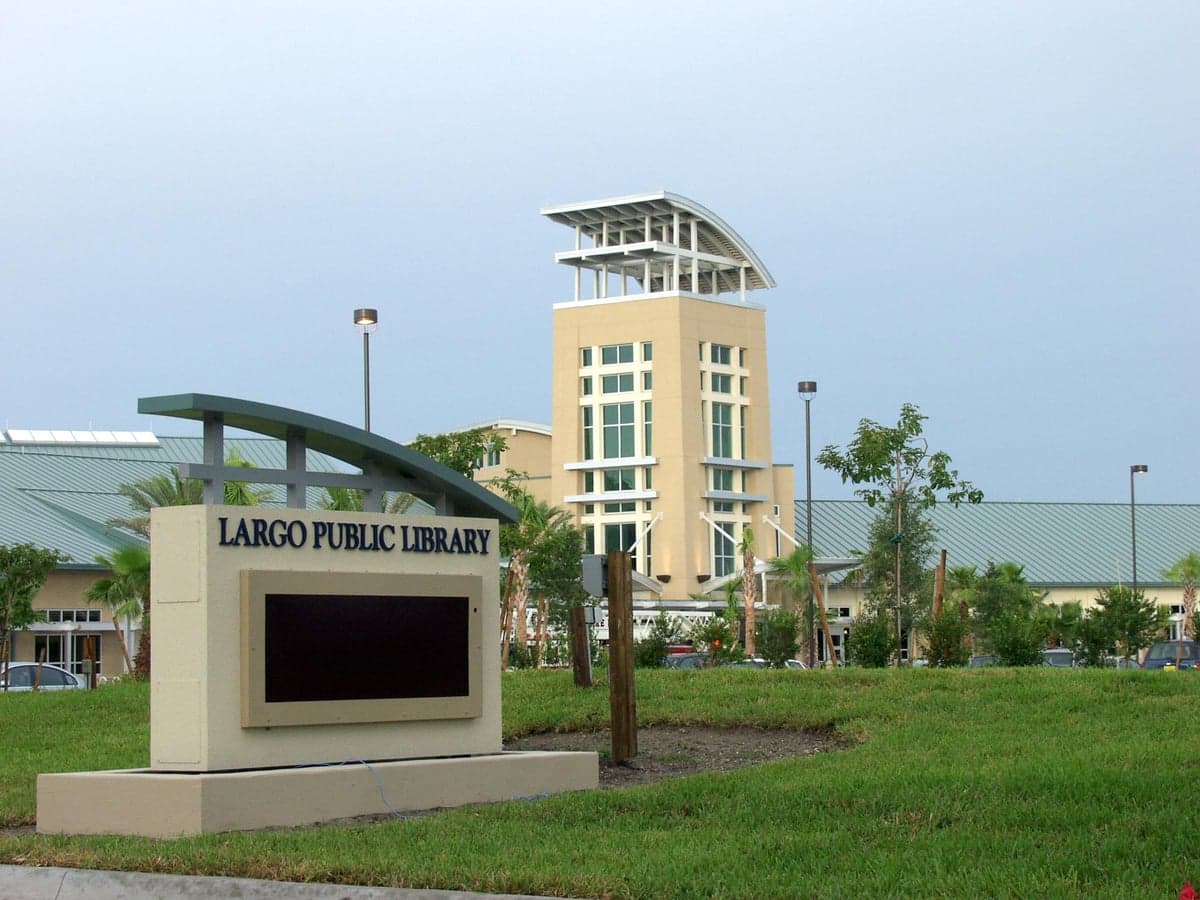
Photo: Wikipedia
Political ClimatePolitical Climate in Largo, FL
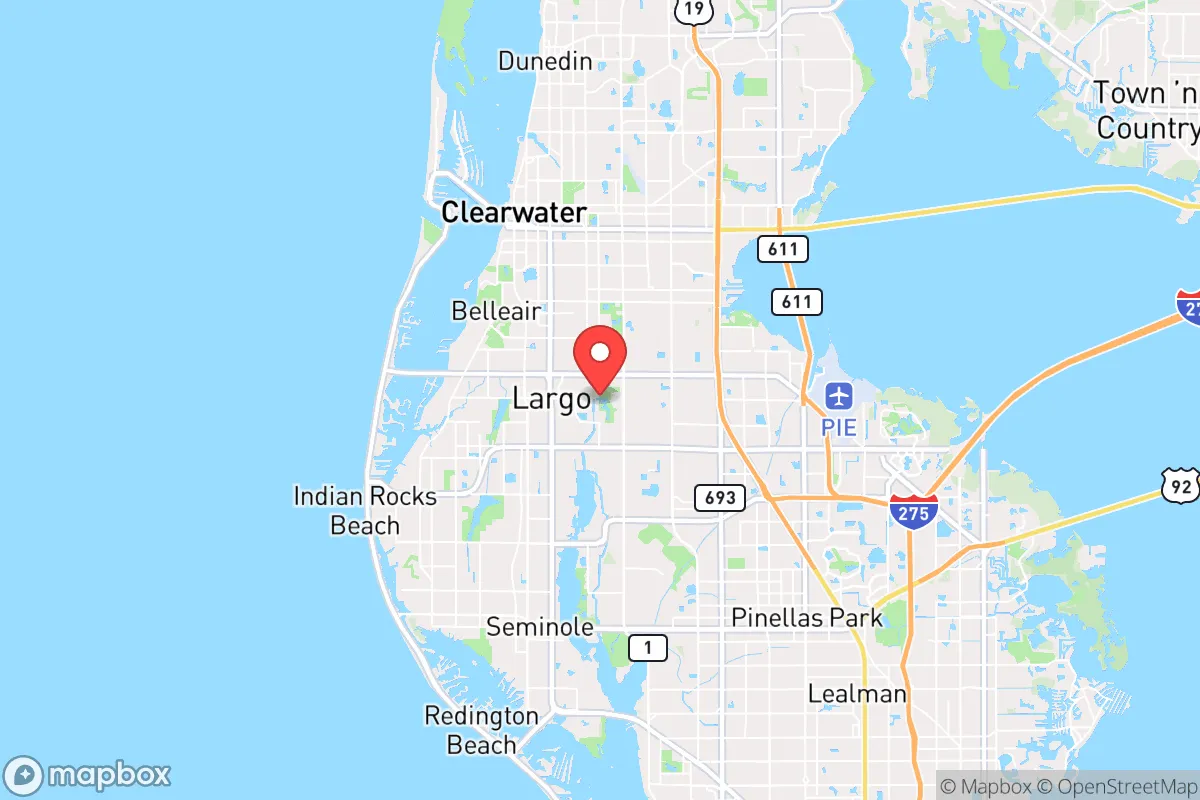
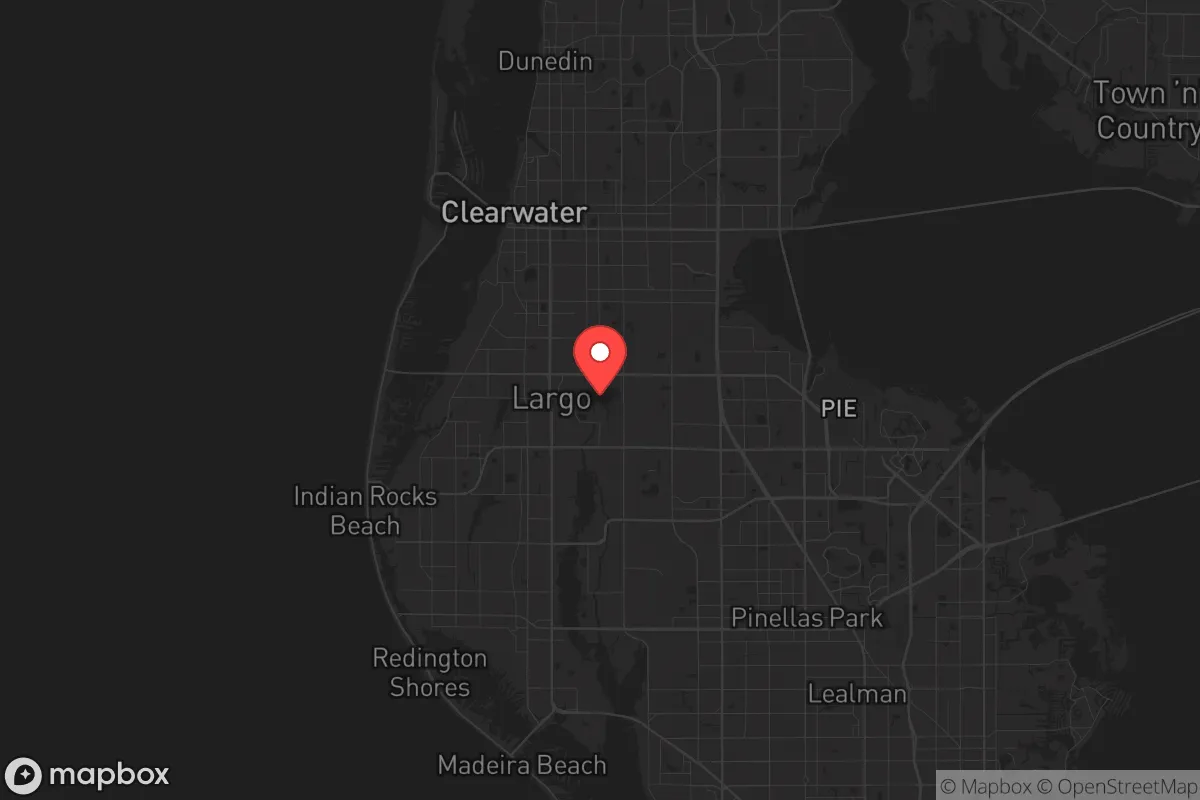
District shown is the primary district for this city’s centroid. Cities may span multiple districts.
Local Political AnalysisPolitical Analysis of Largo, FL
Largo, Florida, sits in a politically interesting pocket of Pinellas County, leaning conservative with a Cook PVI of R+5, but it’s not the deep-red stronghold it was twenty years ago. The city itself has a solid Republican tilt, especially in local races and school board elections, but you can feel the shift as more folks move down from blue states and bring their voting habits with them. The surrounding areas tell the real story: head north to Clearwater, and you’ll find a reliably conservative base, while a short drive south to St. Petersburg shows a much more progressive, Democrat-leaning vibe. That contrast means Largo is a bit of a battleground within the county, and the trajectory is concerning if you value limited government and personal freedoms.
How it compares
Compared to its neighbors, Largo is a conservative island in a sea of shifting politics. Clearwater, just to the north, votes similarly—think R+6 or R+7 in most cycles—and shares Largo’s skepticism of heavy-handed government mandates. But St. Petersburg, only 15 minutes south, is a different world: it’s solidly blue, with a Cook PVI around D+8, and its city council has pushed policies like rent control and sanctuary city rhetoric that would never fly in Largo. Even within Pinellas County, Largo stands out for its resistance to the progressive wave that’s washing over Tampa Bay. The county commission, which Largo helps elect, has held the line on tax hikes and zoning overreach, but you can see the pressure building as new developments bring in younger, more liberal voters. If you’re looking for a place where the government still respects your right to live your life without constant interference, Largo is a better bet than St. Pete, but it’s not immune to the trend.
What this means for residents
For residents, the political climate in Largo means a daily life that’s still pretty free from the kind of overreach you see in more progressive cities. The local government hasn’t gone down the road of mask mandates, business shutdowns, or heavy-handed environmental regulations that choke small businesses. You can still own a firearm without a bunch of hoops, and property taxes are reasonable compared to the rest of the county. But the warning signs are there: the school board has seen some close races between conservative and progressive candidates, and the city council has debated things like “equity” initiatives that sound a lot like government meddling in private affairs. Long-term, if the population keeps growing with transplants from New York and California, Largo could start to look more like St. Pete within a decade. That’s a real concern for anyone who moved here to escape that kind of bureaucracy.
Culturally, Largo still holds onto its old Florida roots—think fishing, church potlucks, and a general distrust of politicians who promise to fix everything with new laws. The city’s policy on short-term rentals, for example, is more hands-off than in nearby Dunedin or Gulfport, which have cracked down hard. But the biggest distinction is the local attitude: people here value their privacy and don’t want the government in their business. If you’re looking for a place where you can still have a say in your own life without a bureaucrat telling you otherwise, Largo is a solid choice—for now. Keep an eye on the next few election cycles, because the direction this city takes will tell you everything about whether it stays a refuge for common sense or gets swallowed by the progressive machine.

State Political ClimatePolitical Climate in Florida
State Political AnalysisPolitical Environment in the State
Florida has transformed from a classic swing state into a solidly Republican-leaning powerhouse over the past two decades, with a current partisan lean of roughly +3 to +5 points in statewide races. The dominant coalition is a mix of conservative retirees, Hispanic voters (especially Cuban-Americans and Venezuelans in Miami-Dade), and fast-growing exurban families from the I-4 corridor. The trajectory has been unmistakably rightward since 2008, when Barack Obama carried the state by 2.8 points; by 2024, Donald Trump won it by over 3 points, and Republicans now hold supermajorities in both chambers of the legislature. This isn't a purple state anymore — it's a red state with a few stubborn blue pockets.
Urban vs. rural divide
The political map of Florida is a study in stark contrasts. The deep-blue strongholds are Miami-Dade County (though it's shifting right, with Trump winning 46% there in 2024, up from 34% in 2016), Broward County (Fort Lauderdale), and Palm Beach County (though Palm Beach proper is more purple than its reputation). Orlando's Orange County is reliably blue, and Tampa's Hillsborough County is a perennial battleground. But the real story is the red wave in the suburbs and exurbs. Collier County (Naples) votes +30 R, and Lee County (Fort Myers) is similarly deep red. The Panhandle — places like Pensacola, Panama City, and Tallahassee's surrounding Leon County (the lone blue dot up there) — is deeply conservative. The I-4 corridor, which runs from Tampa through Lakeland to Daytona Beach, is the state's political heartland, and it's trending redder as transplants from blue states settle in places like The Villages (the most Republican-leaning metro in the country, voting +45 R) and Ocala. The rural north and central regions — Lake City, Live Oak, and the cattle country around Okeechobee — are solidly Republican. The only reliably blue areas outside of South Florida are Alachua County (Gainesville, home to the University of Florida) and Leon County (Tallahassee, the state capital).
Policy environment
Florida's policy environment is a conservative's dream, and it's been aggressively engineered that way since Governor Ron DeSantis took office in 2019. There is no state income tax, a massive draw for high-earners and retirees. Property taxes are moderate, with a homestead exemption that caps annual increases at 3% for primary residences. The regulatory posture is business-friendly: Florida is a "right-to-work" state, and permitting for construction and development is streamlined compared to the Northeast or West Coast. On education, the state has pioneered school choice: the Family Empowerment Scholarship program allows any K-12 student to use state funds for private school or homeschooling, and Florida's charter school sector is one of the most robust in the nation. The "Don't Say Gay" law (HB 1557) restricts classroom instruction on sexual orientation and gender identity through third grade, and the "Stop WOKE Act" (HB 7) limits how race-related concepts can be taught in schools and workplaces. Healthcare policy is mixed: Florida did not expand Medicaid under the ACA, and the state has a competitive private insurance market. Election laws have been tightened: SB 90 (2021) added voter ID requirements, limited drop boxes, and restricted mail-in ballot requests, and the state has purged non-citizens from voter rolls. Gun laws are among the most permissive in the country: permitless carry (constitutional carry) was signed into law in 2023, and there is no waiting period for long guns. The state also has a "stand your ground" law and preempts local gun ordinances.
Trajectory & freedom
Florida is unequivocally becoming more free in the classical liberal sense, especially compared to its Northeastern and West Coast peers. The 2023 permitless carry law (HB 543) eliminated the requirement for a concealed weapons license, putting Florida in the company of 25+ other constitutional carry states. The "Parental Rights in Education" law (HB 1557) gave parents more say over what their children are taught about gender and sexuality. The "Individual Freedom Act" (HB 7) banned mandatory diversity training that promotes race-based stereotyping in workplaces and schools. On medical freedom, Florida banned COVID-19 vaccine mandates for private employers in 2023 (SB 252) and prohibited mask mandates in schools. Property rights were strengthened by the "Live Local Act" (SB 102), which preempts local rent control ordinances and streamlines affordable housing development. However, there are concerns: the state's aggressive preemption of local ordinances — banning sanctuary cities, prohibiting local minimum wage hikes, and overriding local gun laws — means that local control is limited. The state also has a "Don't Say Gay" expansion (HB 1069) that extends restrictions through 8th grade and bans classroom instruction on gender identity entirely. For conservatives, the trajectory is positive: personal liberty is expanding in areas of speech, self-defense, parental rights, and economic freedom.
Civil unrest & political movements
Florida has seen its share of political flashpoints, but they've been less violent than in other states. The 2020 George Floyd protests in Miami, Tampa, and Orlando saw some looting and property damage, but the state's "law and order" posture under DeSantis — including the creation of a dedicated election crimes unit and the suspension of progressive prosecutors — has been popular. The immigration debate is front and center: SB 1718 (2023) made it a felony to transport undocumented immigrants into the state, required hospitals to ask about immigration status, and invalidated out-of-state driver's licenses for undocumented residents. This has led to protests from immigrant rights groups, especially in Miami-Dade and Immokalee. The "Don't Say Gay" laws have sparked protests from LGBTQ+ activists, particularly in St. Petersburg and Wilton Manors, but these have been relatively small. Election integrity remains a hot topic: the state's 2020 election was widely seen as clean, but the 2022 creation of the Office of Election Crimes and Security has been controversial. There is no serious secessionist movement, but there is a strong "free state of Florida" sentiment among conservatives who see the state as a refuge from progressive policies elsewhere. The most visible political movement is the "DeSantis-aligned" conservative grassroots, which has successfully pushed for school board elections and local government races to become partisan battlegrounds.
Projection
Over the next 5-10 years, Florida will likely become even more Republican, driven by two massive demographic forces. First, the state is absorbing roughly 1,000 new residents per day, the vast majority from blue states like New York, California, and Illinois. These transplants tend to be older, wealthier, and more conservative than the populations they leave behind — they're moving for lower taxes, less regulation, and a perceived higher quality of life. Second, Hispanic voters, particularly in Miami-Dade, are shifting rightward at an accelerating pace. Cuban-Americans have long been Republican-leaning, but Venezuelans, Nicaraguans, and Colombians are now voting Republican in large numbers, driven by anti-socialism sentiment and economic concerns. The state's rural and exurban areas will continue to grow, while the urban cores of Miami, Fort Lauderdale, and Orlando will remain blue but lose relative influence. The biggest wildcard is climate change: rising sea levels and stronger hurricanes could eventually slow in-migration, but for now, the trend is clear. A new resident moving to Florida in 2026 should expect to live in a state that is solidly red, with a government that is actively expanding personal freedoms in areas like education, gun rights, and economic liberty, while being aggressive on immigration and election security.
For a conservative individual or family considering relocation, Florida offers a rare combination: no state income tax, strong school choice, permissive gun laws, and a government that actively pushes back against federal overreach. The trade-offs are real — hot summers, hurricane risk, and a fast-growing population that strains infrastructure — but the political climate is stable and trending in a direction that aligns with conservative values. If you're looking for a state where your vote actually counts in a Republican primary and where the legislature is actively expanding your freedoms, Florida is the clear choice in the Southeast. Just be prepared for the traffic and the humidity.
* Values derived from national, state, county, city and local statistics and may differ in a specific area. Last updated: 2026-04-22T21:33:04.000Z
Narrative content on this page is AI-generated and may contain mistakes. Verify any details that matter before acting on them.
ReloMaps may earn a commission from affiliate links at no extra cost to you.

