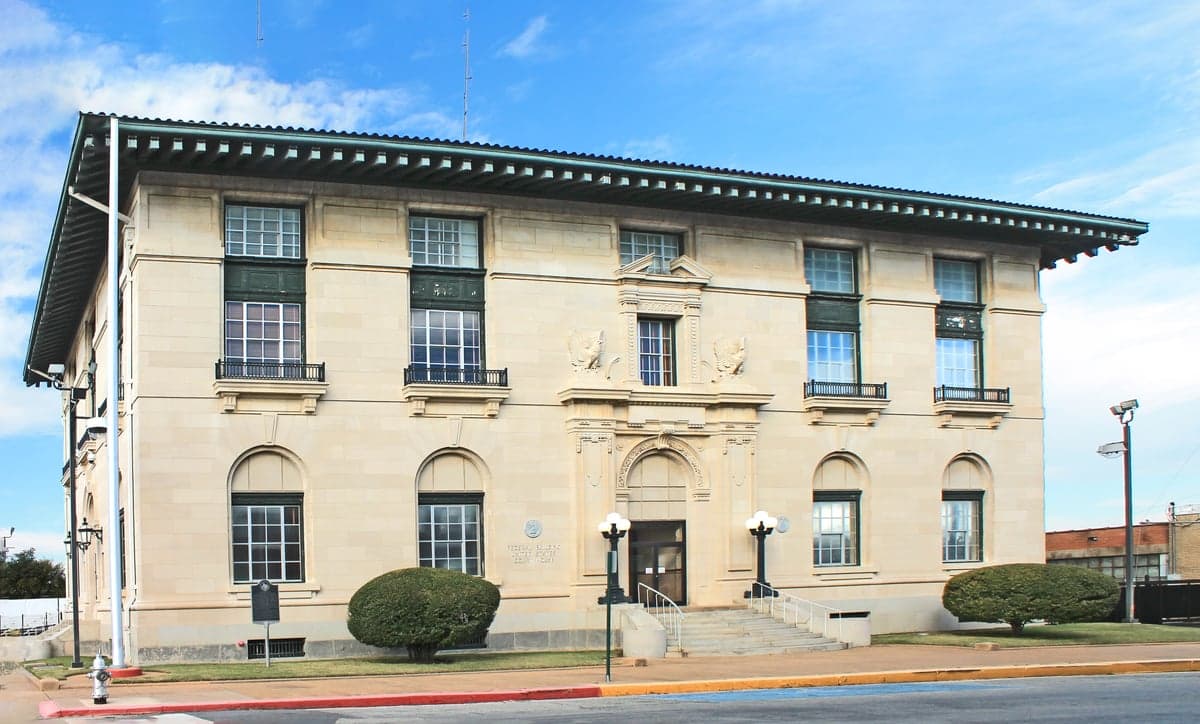
Photo: Wikipedia
Political ClimatePolitical Climate in Sherman, TX
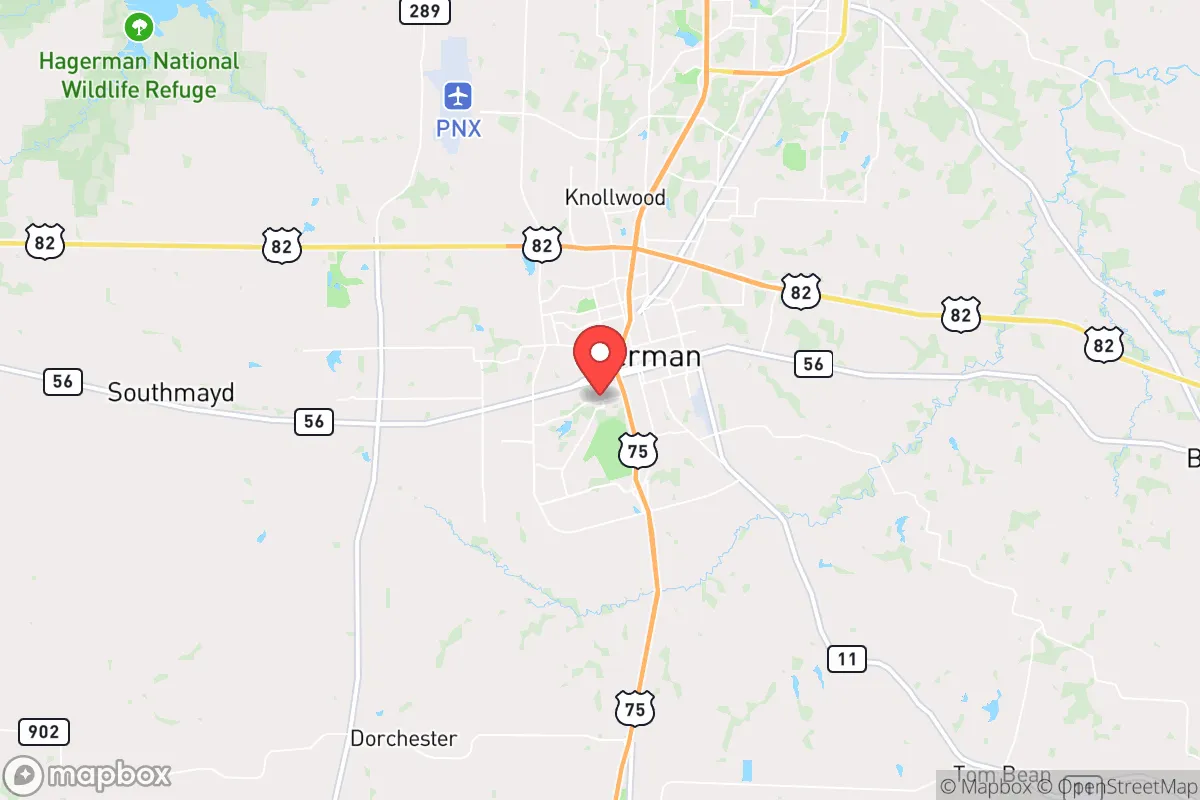
District shown is the primary district for this city’s centroid. Cities may span multiple districts.
Local Political AnalysisPolitical Analysis of Sherman, TX
Sherman, Texas, sits deep in reliably conservative territory, with a Cook Partisan Voting Index of R+16—that’s a full 12 points more Republican than the state of Texas as a whole, which sits at R+4. This isn’t a purple area or a place that flirts with swing-voter drama; it’s a community where conservative values like limited government, personal responsibility, and Second Amendment rights are the baseline, not a debate. The political lean here has been steady for decades, and while the broader state has seen some urban drift toward progressive policies, Sherman has held firm, with local elections and county-level results consistently reflecting a deep red majority.
How it compares
When you stack Sherman against the rest of Texas, the difference is stark. The state’s R+4 PVI means places like Dallas, Houston, and Austin—each with their own progressive strongholds—pull the statewide average leftward. Sherman, by contrast, is surrounded by counties that vote like it: Grayson County went +35 for Trump in 2020, while neighboring Cooke County and Fannin County are similarly conservative. Drive 30 minutes south to McKinney or Frisco, and you’ll find more suburban swing voters and a growing number of transplants from blue states who bring different political baggage. Sherman hasn’t seen that shift. It’s still a place where the local school board isn’t fighting over critical race theory because nobody’s pushing it, and where property tax protests are more common than debates over defunding the police. The contrast with Texas’s urban corridors is a reminder that not every part of the state is bending toward progressive overreach.
What this means for residents
For folks living here, the political climate translates into a government that mostly stays out of your business. You’re not dealing with the kind of city council ordinances you see in Austin or Dallas—no heavy-handed mask mandates that lasted forever, no zoning fights that try to dictate what you can do with your own land. The local sheriff’s office isn’t interested in becoming a social services agency, and the tax burden, while not nonexistent, is lower than in many parts of Texas because the county isn’t chasing every federal grant that comes with strings attached. That said, there’s a growing concern among longtime residents that the state-level push for things like expanded background checks or red flag laws could trickle down. Sherman’s strength is that local leaders have so far resisted those pressures, but with Texas’s population growing and urban voters gaining influence, the fight to keep Sherman’s conservative character intact is an ongoing one. The near-term outlook is solid—most newcomers here are moving for the same reasons you are: lower cost of living, less regulation, and a sense that your vote actually means something. Long-term, it’ll depend on whether the state legislature can hold the line against federal overreach and whether Sherman can keep its identity as a place where personal freedom isn’t negotiable.
Culturally, Sherman feels more like a small-town Oklahoma or Arkansas than a typical Texas metro. You won’t find the hipster coffee shops or bike lanes that signal a progressive tilt; instead, it’s churches, gun shows, and Friday night football that define the social calendar. The city’s policy distinctions are subtle but real: no sanctuary city nonsense, a police department that focuses on actual crime rather than social engineering, and a school district that still teaches civics without apology. If you’re looking for a place where the government sees itself as your servant, not your nanny, Sherman delivers. Just keep an eye on the statehouse—because what happens in Austin can still ripple up here, and the only way to keep Sherman Sherman is to stay engaged.

State Political ClimatePolitical Climate in Texas
State Political AnalysisPolitical Environment in the State
Texas has been a reliably Republican state for decades, with a Cook PVI of R+4, but the political landscape is more complex than a single number suggests. The dominant coalition has long been a mix of socially conservative rural voters, business-friendly suburbanites, and a growing population of transplants from blue states, creating a tension that has shifted the state’s trajectory over the last 10-20 years. While the GOP still holds every statewide office and both legislative chambers, the margins have been shrinking in fast-growing metros like Dallas-Fort Worth, Houston, and San Antonio, while deep-red strongholds in the Panhandle and East Texas remain rock-solid. If you’re moving here, you’re stepping into a state that is still conservative but increasingly contested, especially in the suburbs.
Urban vs. rural divide
The political map of Texas is a stark split between its booming, diverse cities and its vast, conservative rural expanse. The major Democratic strongholds are Austin (Travis County, which went +48 for Biden in 2020), El Paso (El Paso County, +38), and Houston’s Harris County (+15), along with Dallas County (+16) and San Antonio’s Bexar County (+14). These urban cores drive the state’s leftward shift, fueled by transplants from California and New York, younger voters, and a growing Hispanic electorate that has trended more Democratic in recent cycles. Meanwhile, the rural and exurban areas—places like Lubbock (Lubbock County, +28 for Trump), Amarillo (Potter County, +30), and the sprawling Midland-Odessa oil patch (Midland County, +42)—are as red as ever. The real battleground is the suburbs: Collin County (north of Dallas) went from +27 R in 2012 to +10 R in 2024, while Fort Bend County (southwest of Houston) flipped from +11 R in 2012 to +6 D in 2024. These shifts are driven by college-educated, moderate voters who are uneasy with the GOP’s cultural hardline but also wary of progressive overreach.
Policy environment
Texas’s policy environment is defined by a low-tax, low-regulation posture that appeals to conservatives, but recent years have seen a notable expansion of government power in certain areas. The state has no income tax, a property tax cap of 10% annual growth (passed in 2019 via Proposition 4), and a regulatory climate that makes it easy to start a business or build a home. On education, the state passed school choice legislation in 2023 (HB 3), creating education savings accounts for special needs students, though a broader voucher program remains stalled. Healthcare is a mixed bag: Texas refused Medicaid expansion under Obamacare, keeping the system lean, but the state also passed SB 8 in 2021, the heartbeat bill that effectively banned abortion after six weeks, and SB 14 in 2023, a near-total ban. Election laws tightened with SB 1 in 2021, which restricted mail-in voting, added ID requirements, and banned drive-through voting—a move that drew fire from progressives but was defended as election integrity. For a conservative, the policy environment is largely favorable, but the growing influence of urban voters is a concern, as it could erode these gains over time.
Trajectory & freedom
The trajectory of personal freedom in Texas is a mixed bag, with clear expansions in some areas and troubling contractions in others. On the positive side, constitutional carry (HB 1927) became law in 2021, allowing permitless carry of handguns for anyone 21 or older—a major win for Second Amendment advocates. Parental rights were strengthened with HB 900 in 2023, which requires book vendors to rate materials for sexual content and restricts access in schools, and SB 14 banned gender transition procedures for minors. Property rights got a boost with SB 1050 in 2021, limiting the ability of homeowners’ associations to restrict solar panels and other improvements. However, there are red flags. The state’s COVID-19 emergency powers were used aggressively by Governor Abbott in 2020-2021, including mask mandates and business closures, which many conservatives saw as government overreach. The Texas Privacy Protection Act (HB 4390) passed in 2023, limiting government collection of biometric data, but the state also expanded surveillance with SB 20 in 2021, which created a database of police officers involved in misconduct. The biggest concern for freedom-minded residents is the property tax burden: despite the cap, Texas has some of the highest effective property tax rates in the nation, and the state’s reliance on them means local governments have a strong incentive to inflate appraisals. Overall, Texas is moving in a more conservative direction on cultural issues but remains a high-tax state in practice.
Civil unrest & political movements
Texas has seen its share of political flashpoints, particularly around immigration and election integrity. The 2021 “Save Our Elections” rally in Austin drew thousands of conservatives protesting SB 1, while left-wing groups like Texas Organizing Project and MOVE Texas have been active in voter registration drives, particularly in Harris County. Immigration is the hottest button: the state launched Operation Lone Star in 2021, deploying DPS troopers and National Guard to the border, and passed SB 4 in 2023, which makes illegal entry a state crime—a law currently tied up in court. The El Paso shooting in 2019 and the Uvalde school shooting in 2022 sparked protests on both sides, with gun rights advocates pushing back against calls for stricter laws. Secession rhetoric, led by the Texas Nationalist Movement, has gained some traction online but remains fringe. Election integrity remains a live issue: the 2020 and 2022 cycles saw Harris County plagued by administrative errors (e.g., missing ballot paper, understaffed polling places), leading to a state takeover of elections there in 2023. For a new resident, the most visible sign of political tension is the constant presence of campaign signs and the occasional protest at the state capitol, but daily life is generally peaceful.
Projection
Over the next 5-10 years, Texas is likely to become more competitive at the statewide level, but a full flip to blue is unlikely. The key demographic driver is in-migration from California and New York, which added over 1 million new residents between 2020 and 2024, many of whom are moderate or left-leaning. The Hispanic vote is the wildcard: while it shifted right in 2024 (especially in the Rio Grande Valley, where counties like Zapata flipped from +20 D to +15 R), it remains a swing bloc that could determine future elections. The suburban shift will continue, with places like Williamson County (north of Austin) and Denton County moving from solid red to lean red. However, the rural vote is so overwhelmingly Republican that the state’s overall lean will remain R+2 to R+4 for at least another decade. The biggest risk for conservatives is that the state’s policy environment could moderate: a future Democratic governor could push for Medicaid expansion, higher property taxes, or restrictions on gun rights. For now, the GOP’s grip on the legislature and the courts (all nine Texas Supreme Court justices are Republican) provides a buffer. If you’re moving here, expect a state that is still conservative but increasingly divided, with the suburbs as the decisive battleground.
For a new resident, the bottom line is that Texas offers a largely conservative policy environment with low taxes and strong protections for gun rights and parental authority, but it’s not a libertarian paradise. The property tax burden is real, the government has shown a willingness to use emergency powers, and the political climate is heating up as the state diversifies. If you’re looking for a place where your values are still the majority, the rural and exurban areas are your best bet. If you’re moving to a suburb of Dallas or Houston, be prepared for a more contested environment where every election matters. Texas is still a red state, but it’s no longer a safe one—and that’s something worth watching closely.
* Values derived from national, state, county, city and local statistics and may differ in a specific area. Last updated: 2026-05-11T13:39:36.000Z
Narrative content on this page is AI-generated and may contain mistakes. Verify any details that matter before acting on them.
ReloMaps may earn a commission from affiliate links at no extra cost to you.

