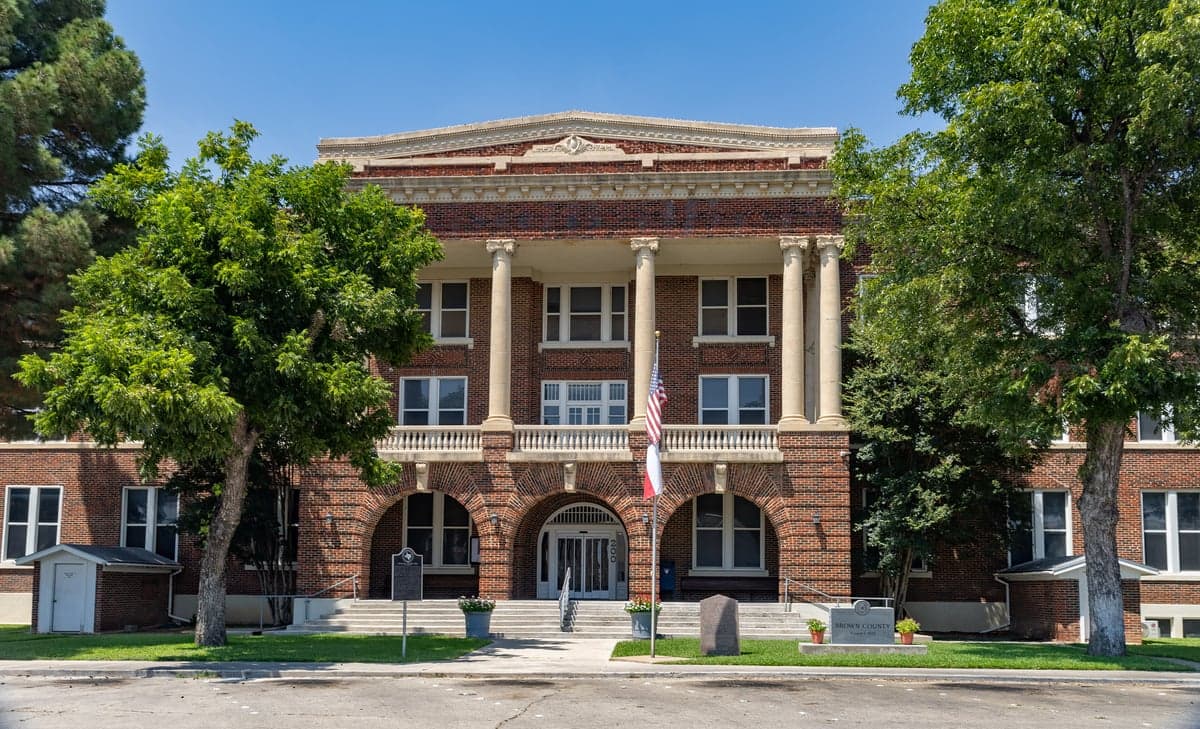
Photo: Wikipedia
Political ClimatePolitical Climate in Brownwood, TX
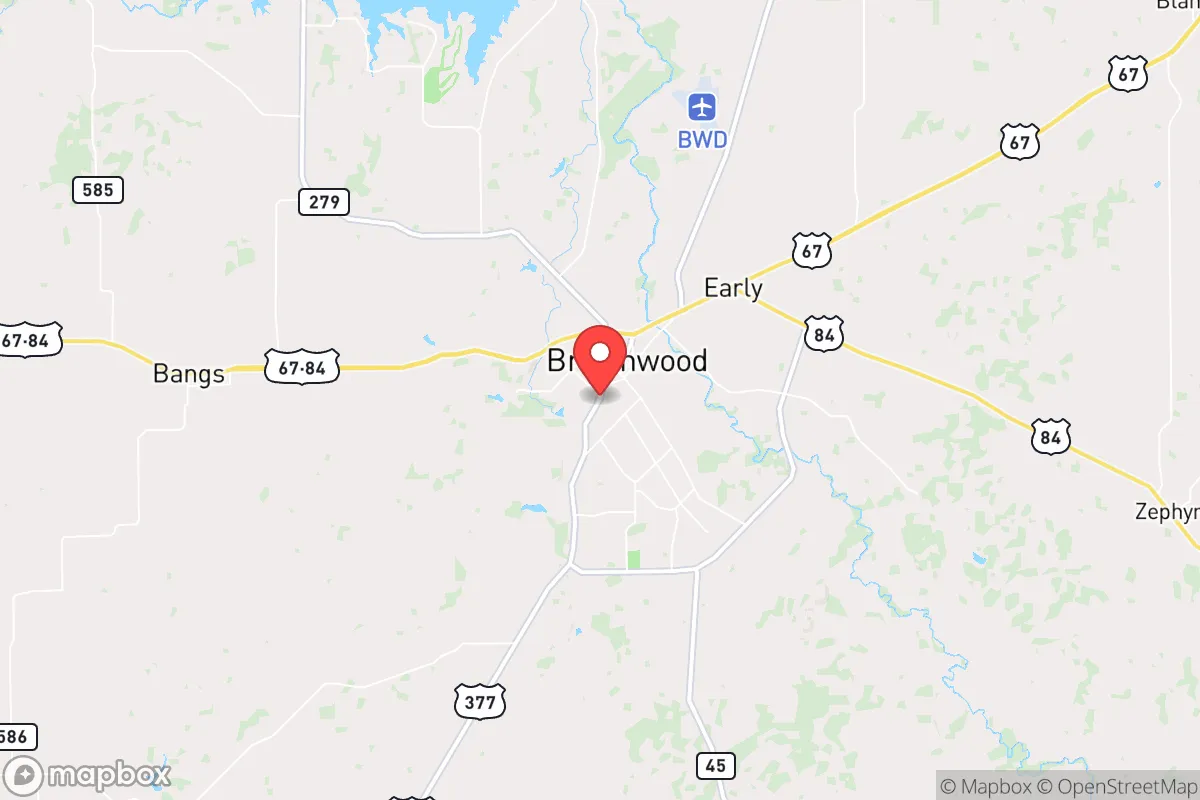
District shown is the primary district for this city’s centroid. Cities may span multiple districts.
Local Political AnalysisPolitical Analysis of Brownwood, TX
Brownwood is about as reliably conservative as it gets in Texas, and that’s not changing anytime soon. The Cook PVI here is R+22, which means the area votes Republican by a margin 22 points higher than the national average—and in practice, it feels even redder than that number suggests. Brown County as a whole hasn’t voted for a Democratic presidential candidate since Lyndon Johnson was on the ballot in 1964, and local elections are dominated by folks who take a pretty dim view of government overreach. If you’re looking for a place where personal freedoms and local control still mean something, this is it. But I’ve seen the winds shifting in some of the bigger towns nearby, and it’s worth knowing how Brownwood stacks up before you make the move.
How it compares
Drive an hour east to San Angelo, and you’ll find a similar conservative vibe—R+18 on the Cook scale—but with a bit more of a military and oil-and-gas influence that can make the politics feel a little more transactional. Head south to Austin, and you’re in a completely different world: Travis County is D+28, a progressive stronghold where property taxes are high and regulations on everything from housing to firearms are tighter. Brownwood sits in that sweet spot where you don’t have to worry about city council trying to ban gas stoves or impose rent control. Compared to Abilene to the north, which is R+20, Brownwood feels a little more rural and a little less influenced by the big universities. The real contrast, though, is with the smaller towns like Early or Bangs—they’re even more conservative, but they don’t have the same economic base or services. Brownwood gives you the conservative values without feeling like you’re cut off from the world.
What this means for residents
For day-to-day life, the political climate here means you get to live with a lot less government interference. Property taxes are a concern everywhere in Texas, but Brownwood’s city council and county commissioners have historically been reluctant to hike rates or add new fees. You won’t see mask mandates or business shutdowns like you did in some places during 2020—local leaders trusted residents to make their own choices. The school board leans traditional, and the local police department isn’t defunded or demoralized. If you value the Second Amendment, you’ll find plenty of support, with no local ordinances trying to chip away at it. The downside? If you’re hoping for a more progressive cultural scene or a diverse political debate, you’ll be disappointed. Most folks here agree on the basics: lower taxes, less regulation, and a government that stays out of your personal life. That’s a relief for a lot of people, but it can feel like an echo chamber if you’re used to more variety.
One thing that sets Brownwood apart is how the local culture reinforces the politics. The Howard Payne University influence brings a steady stream of conservative-minded students and faculty, and the annual Brownwood Rodeo and the Heart of Texas Fair are big community events where you’ll hear more talk about hunting and small business than about progressive causes. There’s a strong sense of self-reliance here—people take care of their own problems without calling for a new government program. That said, I’ve noticed a few concerning trends creeping in from the state level. The push for more state mandates on local zoning and water rights is something to watch, because it could chip away at the local control that makes Brownwood work. And if the progressive wave that’s hit Austin and Dallas ever spreads this far west, you might see more pressure on the school board and city council. For now, though, Brownwood remains a place where you can raise a family, run a business, and live your life without a bureaucrat looking over your shoulder. It’s not perfect, but it’s about as close as you’ll get in modern Texas.

State Political ClimatePolitical Climate in Texas
State Political AnalysisPolitical Environment in the State
Texas remains a solidly Republican state at the statewide level, with every GOP nominee winning the presidency or Senate since 1994, but the coalition is fracturing under the weight of explosive growth. The dominant coalition is still conservative, anchored by rural and exurban voters, but the 2020 and 2024 cycles showed a narrowing margin — Trump won Texas by 5.6 points in 2020 and roughly 6 points in 2024, down from 9 points in 2016. The long arc is a slow, steady drift from deep red to lean red, driven by massive in-migration from blue states into the metroplexes, but the state’s political infrastructure and policy direction remain firmly conservative.
Urban vs. rural divide
The political map of Texas is a stark checkerboard. The big four metros — Houston, Dallas-Fort Worth, San Antonio, and Austin — are the blue engines. Harris County (Houston) alone delivers nearly 1 million Democratic votes, and Travis County (Austin) is the most liberal major county in the South. But the rest of the state is overwhelmingly red. The Texas Panhandle (Lubbock, Amarillo), East Texas (Tyler, Longview), and West Texas (Midland, Odessa) vote Republican by 30-50 point margins. The real story is the suburbs: places like Collin County (north of Dallas) and Denton County were once GOP strongholds but have shifted from +30 to +10 or less in a decade. Meanwhile, the Rio Grande Valley (McAllen, Brownsville), historically Democratic, has swung hard toward the GOP — Hidalgo County went from +40 D in 2012 to nearly flipping in 2024. That’s the new Texas: the rural and exurban vote still outweighs the cities, but the margins are shrinking fast.
Policy environment
Texas’s policy environment is a conservative’s dream on paper, but the reality is more complicated. There is no state income tax, a huge draw, but property taxes are among the highest in the nation — the average effective rate is about 1.6%, and in fast-growing suburbs like Frisco or Cedar Park, you’ll pay 2.5% or more. The regulatory posture is light: no state-level occupational licensing for many trades, no state minimum wage above the federal $7.25, and a business-friendly tort system. Education policy is a battleground: the 2023 school voucher bill (SB 8) failed in the House, but Governor Abbott made it his top priority and a new version passed in 2025, creating education savings accounts for 25,000 students. Healthcare is a mixed bag: Texas has the highest uninsured rate in the nation (about 18%), and the state refused Medicaid expansion under Obamacare. Election laws tightened after 2020 with SB 1 (2021), which banned 24-hour and drive-through voting, added ID requirements for mail ballots, and empowered poll watchers. It’s a state that governs like a red state, but the cracks are showing — especially in the suburbs where parents are demanding more school choice and lower property taxes.
Trajectory & freedom
On the freedom front, Texas has moved decisively in one direction: more liberty on some fronts, less on others. Gun rights expanded dramatically with permitless carry (HB 1927, 2021), allowing any law-abiding adult to carry a handgun without a license. Parental rights got a massive boost with the 2023 ban on gender transition procedures for minors (SB 14) and the requirement that school libraries get parental consent for certain materials (HB 900). Medical autonomy took a hit with the near-total abortion ban (trigger law, 2021), but that’s a feature, not a bug, for the conservative audience. Property rights are strong — no state-level rent control, and the 2023 law limiting municipal annexation power (SB 2038) protects landowners. But taxation is the weak spot: property taxes have risen faster than inflation in most metros, and the 2023 property tax cut (SB 2) was a one-time relief, not a structural fix. The trajectory is clear: Texas is becoming more free on cultural and Second Amendment issues, but the fiscal freedom is eroding as local governments keep spending. The 2025 session saw a push for a state spending cap and a flat income tax ban, but neither passed — that’s a red flag for anyone watching government overreach.
Civil unrest & political movements
Texas has seen its share of flashpoints. The 2020 Black Lives Matter protests in Austin, Houston, and Dallas were large and occasionally violent, with Austin alone seeing over $10 million in property damage. The response was a conservative backlash: the 2021 law (HB 20) that made it a felony to bail out someone accused of violent protest-related crimes, and the 2023 law (SB 23) that created a new crime of “riot” with enhanced penalties. Immigration politics are the hottest button: Operation Lone Star, launched in 2021, deployed state troopers and National Guard to the border, and the 2023 law (SB 4) made illegal entry a state crime — currently tied up in court. Sanctuary city bans have been in place since 2017 (SB 4), and local sheriffs who refuse to cooperate with ICE can be removed. Election integrity remains a live issue: the 2020 audit of four counties (Harris, Dallas, Tarrant, Collin) found no widespread fraud, but the 2021 law tightened procedures anyway. Secession rhetoric flares up occasionally — the Texas Nationalist Movement has some grassroots support, but it’s fringe. What a new resident will notice is the constant political tension at the local level: school board meetings over library books, county commissioner meetings over property tax rates, and city council fights over zoning and housing density. It’s not a quiet state.
Projection
Over the next 5-10 years, Texas will continue to shift purple, but it won’t flip blue anytime soon. The in-migration is slowing — net domestic migration peaked in 2022 and is cooling — and the newcomers are a mixed bag: many are conservatives fleeing California, but a growing share are young professionals who lean left. The suburbs of Dallas and Houston will be the decisive battlegrounds: places like Fort Bend County (already purple) and Williamson County (north of Austin, trending blue) will determine whether Texas stays red. The GOP’s advantage is that the rural vote is not shrinking as fast as the urban vote is growing, and the Hispanic shift toward the GOP in the Valley and border counties could offset losses in the suburbs. Policy-wise, expect more school choice expansion, more property tax compression (but not a true fix), and continued fights over immigration enforcement. The biggest wildcard is the 2026 gubernatorial race: if Abbott runs again and wins, the conservative agenda continues; if a Democrat wins (unlikely but not impossible), the whole trajectory changes. For a new resident, the bottom line is that Texas will remain a conservative state for at least another decade, but the margins will be tighter, the fights louder, and the property tax bills higher.
For someone moving to Texas now, the practical takeaway is this: you’re getting a state that still values individual liberty on guns, parenting, and taxes, but you’ll need to be politically engaged to keep it that way. The school board meetings matter. The county commissioner races matter. The property tax appraisal protests matter. Texas is not a place to sit back — it’s a place where your vote and your voice still count, but only if you show up. If you’re looking for a state that will protect your rights without you having to fight for them, that state doesn’t exist. But Texas is as close as it gets, and the fight is still winnable.
* Values derived from national, state, county, city and local statistics and may differ in a specific area. Last updated: 2026-04-15T06:21:19.000Z
Narrative content on this page is AI-generated and may contain mistakes. Verify any details that matter before acting on them.
ReloMaps may earn a commission from affiliate links at no extra cost to you.

