Photo: Wikipedia
Political ClimatePolitical Climate in Destin, FL
District shown is the primary district for this city’s centroid. Cities may span multiple districts.
Inherited from parent state — no local data available.
Local Political AnalysisPolitical Analysis of Destin, FL
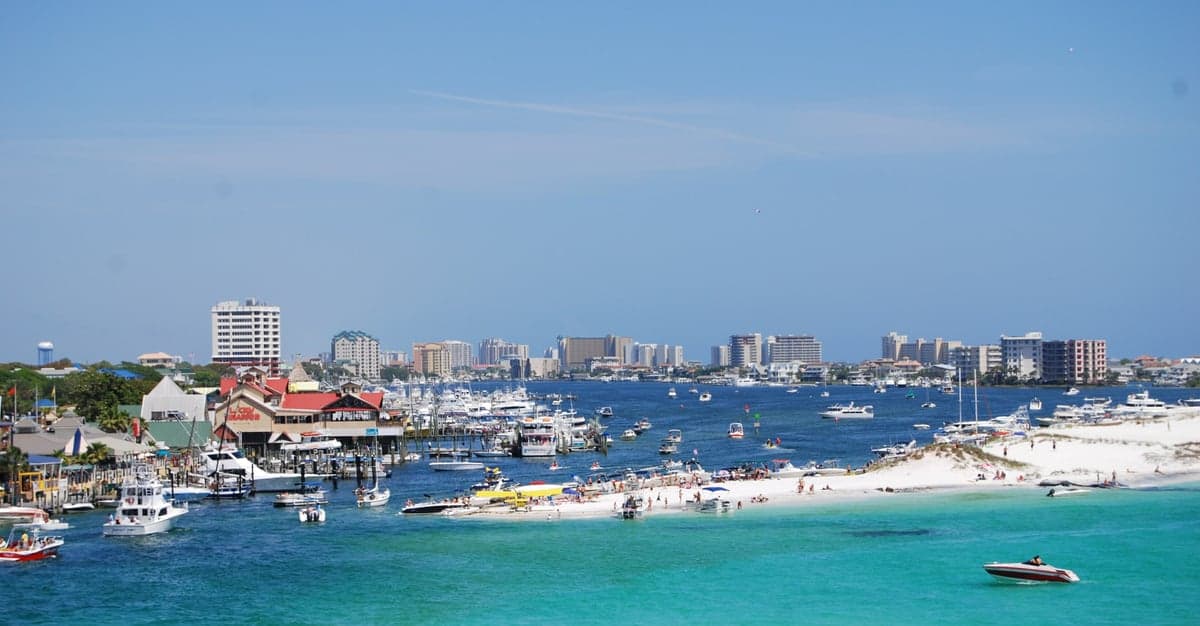
Destin, Florida, sits solidly in the red, with a Cook PVI of R+18 that reflects a deeply ingrained conservative culture. This isn't a purple area that flips back and forth; it's a place where limited government, personal responsibility, and traditional values have been the bedrock for generations. The political trajectory here has been remarkably stable, though you can feel a growing unease as outside influences—from both coastal transplants and federal overreach—start to test the local way of life.
How it compares
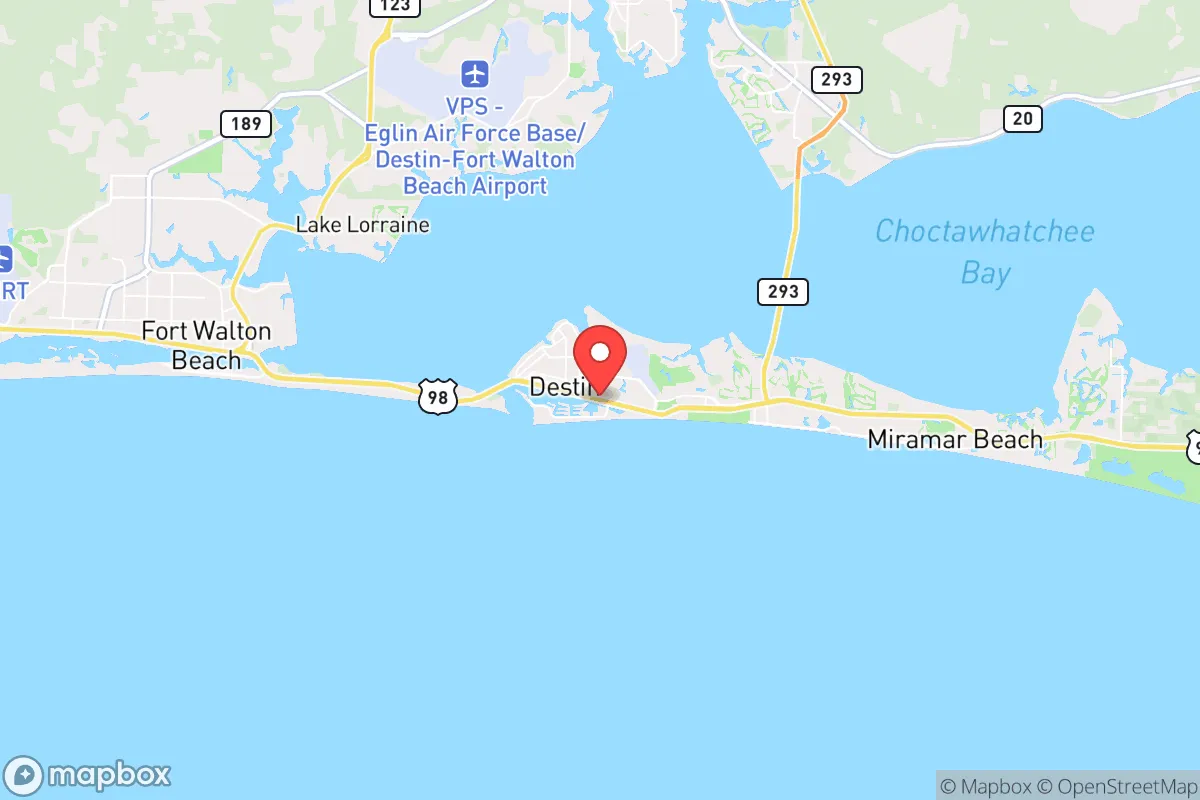
Drive just a few miles east to Panama City Beach, and you'll find a similar conservative vibe, though it's a bit more transient with the tourist crowd. Head west toward Fort Walton Beach or up to Niceville, and the politics stay reliably red, but with a stronger military influence that leans even harder into fiscal conservatism. The real contrast is south, across the Choctawhatchee Bay. Places like Seaside and Grayton Beach in Walton County have seen a noticeable influx of progressive-leaning vacationers and second-home owners, bringing with them a push for stricter environmental regulations and more government oversight on short-term rentals. That's a world away from Destin's "live and let live" ethos, where most folks just want to be left alone to run their businesses and raise their families without a bureaucrat in Tallahassee or Washington telling them how to do it.
What this means for residents
For the people who actually live here year-round, the political climate means a few concrete things. First, taxes stay relatively low, and there's no state income tax—a direct reflection of the local preference for keeping government small. Second, you see it in the schools: Okaloosa County schools still emphasize traditional curricula and parental involvement, with less of the ideological experimentation you hear about in bigger districts. Third, and this is the big one, there's a strong resistance to any new mandates, whether it's mask requirements, vaccine passports, or zoning rules that tell you what you can do with your own property. The local city council and county commission are filled with folks who remember when Destin was a sleepy fishing village, and they're skeptical of any "progressive" policy that sounds like it came from a coastal think tank. The concern among long-time residents is that as more people move in from blue states, they'll bring their voting habits with them, slowly eroding the freedom that made this place worth moving to in the first place.
Culturally, Destin still holds onto its distinctions. You won't find a lot of public art installations pushing social messages or city-funded diversity initiatives. Instead, you'll see church parking lots full on Sunday mornings, a strong military presence from nearby Eglin Air Force Base, and a general expectation that the government's job is to pave the roads and stay out of your business. The biggest policy fights lately have been over beach access and short-term rental regulations—classic property rights battles. The fear among locals is that the same progressive wave that has reshaped places like Asheville or Austin is creeping down the Panhandle, one zoning change at a time. For now, Destin remains a place where you can still have a conversation about personal freedom without someone calling for a new ordinance. But the watch is on, because once you give an inch on government overreach, it's hard to take it back.

State Political ClimatePolitical Climate in Florida
State Political AnalysisPolitical Environment in the State
Florida has transformed from a classic swing state into a solidly Republican-leaning powerhouse over the past two decades, with a current partisan lean of roughly +3 to +5 points for the GOP in statewide races. The dominant coalition is a mix of conservative-leaning transplants from the Northeast and Midwest, native-born rural and suburban voters, and a growing bloc of Hispanic voters in places like Miami-Dade and the I-4 corridor who have shifted rightward. Since 2016, the state has moved decisively red, with Governor Ron DeSantis winning re-election by nearly 20 points in 2022 and the GOP now holding supermajorities in both legislative chambers—a far cry from the nail-biters of the 2000 recount era.
Urban vs. rural divide
The political map of Florida is a textbook study in geographic polarization. The major urban centers—Miami, Orlando, Tampa, and Jacksonville—still lean Democratic, but their margins have shrunk dramatically. Miami-Dade County, once a Democratic stronghold by 30+ points, voted for Trump by 11 points in 2020 and DeSantis by 18 in 2022, driven by Cuban-American and Venezuelan voters who see the GOP as tougher on socialism. Meanwhile, the rural Panhandle counties like Liberty and Holmes routinely vote 80%+ Republican, while the suburban rings around Orlando—places like Lake Mary and Winter Garden—have flipped from purple to red as families flee high taxes and crime in blue states. The I-4 corridor from Tampa to Daytona Beach remains the key battleground, but even there, fast-growing exurbs like Ocala and Palm Coast are now reliably conservative.
Policy environment
Florida’s policy environment is a deliberate counterweight to high-tax, high-regulation states. There is no state income tax, which is the single biggest draw for relocating families and remote workers. Property taxes are moderate, and the state’s homestead exemption shields a significant portion of home value from taxation. Regulatory burdens are low—permitting for new construction is streamlined, and occupational licensing has been cut back. On education, Florida leads the nation in school choice, with the Family Empowerment Scholarship program allowing parents to use state funds for private or homeschool expenses. Governor DeSantis signed the Parental Rights in Education Act (HB 1557) in 2022, which prohibits classroom instruction on sexual orientation and gender identity in K-3 and has been a national flashpoint. Election laws were tightened after 2020: SB 90 (2021) requires drop boxes to be monitored, limits third-party ballot collection, and mandates stricter voter ID. Healthcare policy is market-oriented, with no state-level individual mandate and a limited Medicaid expansion that keeps government involvement low.
Trajectory & freedom
On the freedom scale, Florida is moving decisively in the direction of expanded personal liberty—at least for those who value economic freedom, parental rights, and self-defense. The state passed constitutional carry (permitless concealed carry) in 2023, meaning law-abiding adults no longer need a government permission slip to carry a firearm. Stand Your Ground laws remain strong. During COVID, Florida was among the first states to reopen schools and businesses, and DeSantis signed a law banning vaccine passports and mask mandates in schools. Property rights were bolstered by the 2022 Live Local Act, which preempts local zoning to allow more housing density near transit, though critics say it undermines local control. On the concerning side, the state has expanded its use of the death penalty and passed a 15-week abortion ban (HB 5, 2022) that was later tightened to six weeks in 2023—a move that some conservatives support but others see as government overreach into private medical decisions. The trajectory is clear: Florida is becoming more free in economic and Second Amendment terms, but the state is also willing to use government power to enforce social conservatism.
Civil unrest & political movements
Florida has seen its share of political flashpoints, but they tend to be more organized and less chaotic than in states like Oregon or New York. The most visible movement is the Moms for Liberty chapter network, which has been active in school board meetings across Broward and Palm Beach counties, pushing back against critical race theory and LGBTQ curriculum. On the left, the Dream Defenders and other activist groups have staged protests in Tallahassee and Miami over police reform and racial justice, but these have been smaller and less disruptive than in other states. Immigration politics are a constant undercurrent: Florida passed the toughest anti-sanctuary law in the country (SB 1718, 2023), requiring businesses with 25+ employees to use E-Verify and making it a felony to transport undocumented immigrants into the state. This has led to some labor shortages in agriculture and construction, particularly around Immokalee and Homestead. Election integrity remains a hot topic: the 2020 election was certified without major fraud findings, but the GOP base remains skeptical, and the state has purged non-citizens from voter rolls aggressively. A new resident would notice a palpable sense of political engagement—yard signs, bumper stickers, and local activist groups are everywhere, but the tone is more "we won" than "we're fighting in the streets."
Projection
Over the next 5-10 years, Florida is likely to become even more Republican, but with a twist. The in-migration from blue states—roughly 1,000 new residents per day—is disproportionately conservative-leaning, but it's also bringing younger, more diverse populations who may not share the cultural conservatism of the native base. The Hispanic vote, especially in Miami-Dade and Osceola counties, is trending right, but the Puerto Rican community in Orange County (Orlando) remains more Democratic. The biggest wildcard is climate change: rising sea levels and stronger hurricanes could eventually shift development patterns away from coastal areas like Miami Beach and Fort Lauderdale, pushing growth inland to places like The Villages and Gainesville. Politically, expect continued fights over school curriculum, abortion access, and property insurance reform. The state's insurance market is already in crisis, with premiums skyrocketing and some carriers leaving—this could become a major pocketbook issue that tests the GOP's pro-business stance. For now, the trajectory is solidly red, but the coalition is evolving.
For a new resident, the bottom line is this: Florida offers a high degree of personal and economic freedom compared to most blue states, but it's not a libertarian paradise. You'll find low taxes, strong gun rights, and parental control over education, but you'll also encounter aggressive state intervention on social issues and a growing property insurance crisis. If you value low regulation and a conservative cultural environment, you'll feel at home in most of the state—just avoid the deep-blue pockets of Miami Beach and Tallahassee proper. The key is to pick your county carefully: Collier and Lee in the southwest are deeply red, while Alachua (Gainesville) and Leon (Tallahassee) are liberal islands. Do your homework on local politics, because in Florida, the state government may be conservative, but the county commission can still make your life miserable with zoning and school board decisions.
* Values derived from national, state, county, city and local statistics and may differ in a specific area. Last updated: 2026-04-19T06:57:33.000Z
Narrative content on this page is AI-generated and may contain mistakes. Verify any details that matter before acting on them.
ReloMaps may earn a commission from affiliate links at no extra cost to you.

