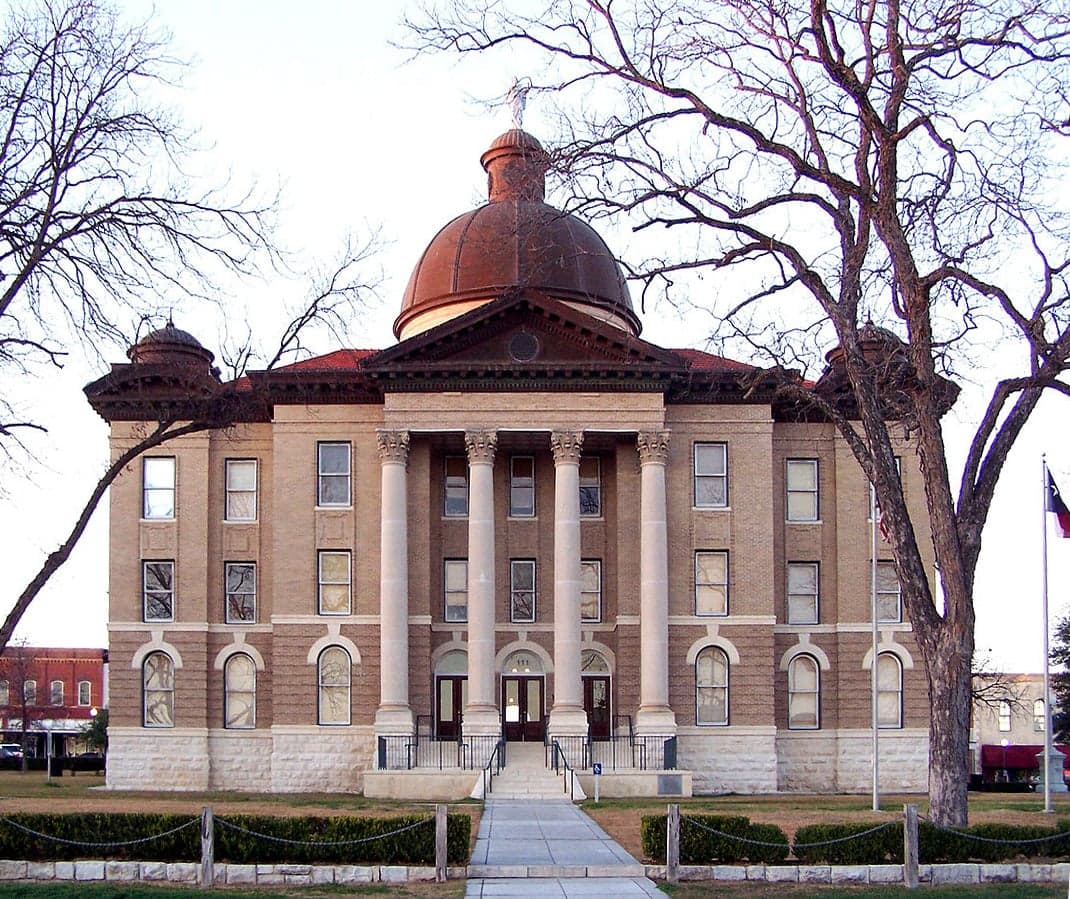
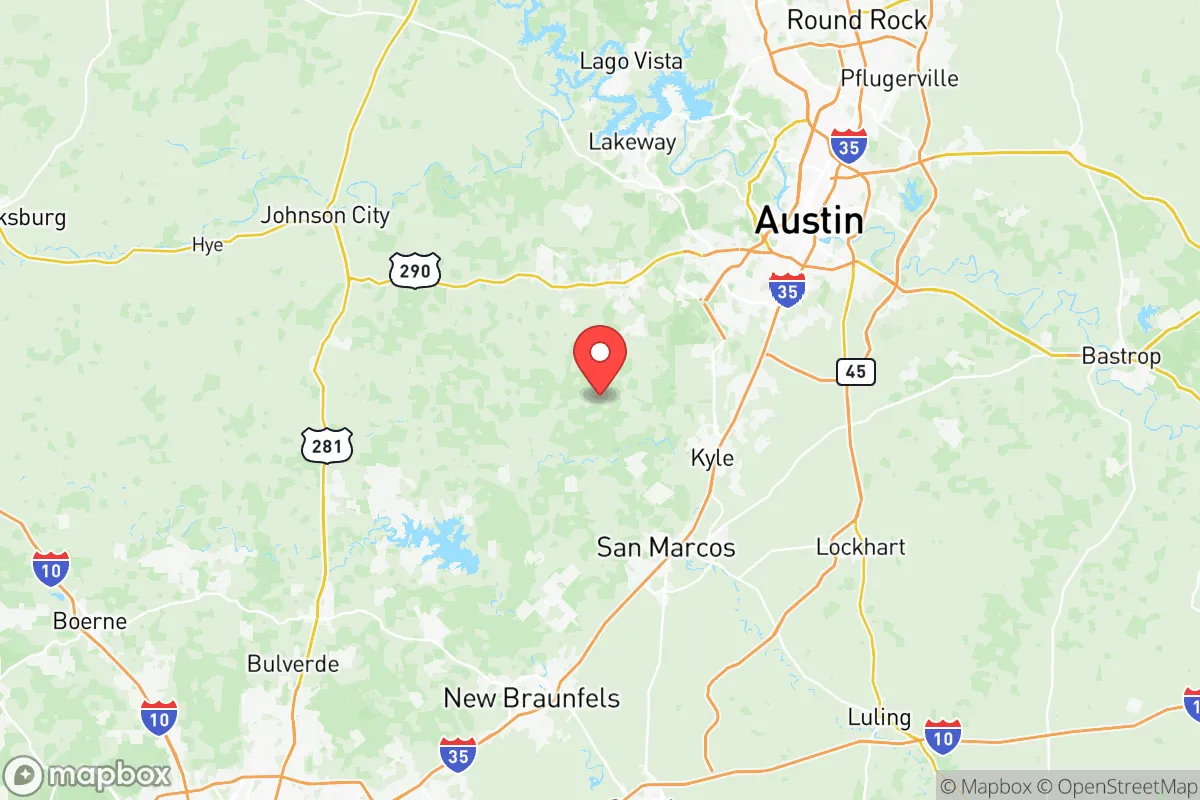
Photo: Wikipedia
Political ClimatePolitical Climate in Hays County
Showing district-level results — no local-only data available.
Local Political AnalysisPolitical Analysis of Hays County
Hays County, Texas, has a Cook PVI of R+11, making it significantly more Republican than the state of Texas overall (R+4), but that number hides a fast-moving shift that longtime residents like me have watched with growing unease. The county seat, San Marcos, has become a deep blue island thanks to Texas State University, while the western hill country towns like Dripping Springs and Wimberley still vote solidly red. The real battleground is the corridor along I-35 between Kyle and Buda, where explosive population growth from Austin transplants is slowly dragging the county's politics leftward—and with it, a creeping expansion of government overreach into things that used to be left to families and local communities.
How it compares
Texas as a whole is R+4, a reliably red state where conservative values still dominate state policy. Hays County's R+11 rating makes it one of the more conservative counties in the state on paper, but that's a legacy number. If you look at the 2024 election results, the margin in Hays County was noticeably tighter than in 2020, and precincts in Kyle and Buda that once voted Republican by double digits are now swinging or flipping blue. Meanwhile, the rural precincts around Dripping Springs and Wimberley held firm, with some precincts going +30 or more for the GOP candidate. The contrast is stark: you can drive ten miles from a Wimberley polling place where everyone's flying Trump flags to a San Marcos precinct where "defund the police" signs still litter lawns. That split is what makes Hays County a microcosm of Texas's broader political tension—but here, the blue shift is happening faster because of direct spillover from Austin's progressive machine.
What this means for residents
For those of us who moved here to escape the overregulation and rising taxes of Travis County, the trend is alarming. The new residents flooding into Kyle and Buda are bringing Austin-style politics with them: demands for higher property taxes to fund expanded government programs, zoning restrictions that limit what you can do with your own land, and school board candidates who push critical race theory and gender ideology into elementary classrooms. The county commissioners' court, still Republican-controlled, has so far held the line on things like mask mandates and business closures, but the margin is shrinking. If the current growth pattern continues, Hays County could flip to a Democratic majority on the commissioners' court within the next two election cycles—and once that happens, you can kiss goodbye the hands-off approach that made this area attractive in the first place.
The cultural and policy distinctions are already visible. In Dripping Springs, you can still build a barn on your acreage without three layers of permits; in San Marcos, the city council just passed an ordinance requiring "equity impact statements" for any new development. The county's Republican leadership has fought to keep property taxes low and resist state-level mandates on local land use, but the progressive wave at the municipal level is chipping away at those protections. If you value personal freedom—the right to raise your kids without government indoctrination, to build on your own land without endless red tape, to keep your tax dollars out of social engineering projects—then the western half of Hays County is still your best bet. But the clock is ticking, and the I-35 corridor is the front line of a battle that will decide whether this county stays a refuge from Austin's overreach or becomes just another suburb of it.

State Political ClimatePolitical Climate in Texas
State Political AnalysisPolitical Environment in the State
Texas has been a reliably Republican state for decades, with a Cook PVI of R+4, but the political landscape is far more complex than a simple partisan label. The dominant coalition is a mix of rural conservatives, suburban moderates, and a growing number of transplants from blue states, creating a dynamic where the GOP still holds all statewide offices but faces increasing pressure in fast-growing metro areas. Over the last 10-20 years, the state has shifted from a solid red stronghold to a more competitive battleground, with Democrats making gains in the suburbs of Houston, Dallas, and Austin, while rural and exurban areas have only deepened their Republican loyalty.
Urban vs. rural divide
The political map of Texas is a tale of two worlds. The major metros—Houston, Dallas-Fort Worth, San Antonio, and Austin—are the engines of Democratic growth, driven by a mix of young professionals, minority voters, and out-of-state transplants. Austin, in particular, has become a deep-blue island, with Travis County consistently voting Democratic by 30+ points. Meanwhile, the vast rural stretches of West Texas, the Panhandle, and East Texas remain deeply Republican, with counties like Lubbock (Lubbock County) and Amarillo (Potter County) routinely voting +40 to +60 points for the GOP. The real battleground is the suburban ring counties—Collin, Denton, Fort Bend, and Williamson—which have been trending leftward as educated, moderate voters move in. In 2020, Bexar County (San Antonio) and Harris County (Houston) both flipped to Biden, a sign that the urban core is solidifying blue while the exurbs and small towns remain red.
Policy environment
Texas’s policy environment is a mixed bag for conservatives. On the plus side, the state has no personal income tax, a strong right-to-work law, and a regulatory climate that generally favors business and property rights. The Texas Legislature has passed significant election integrity measures, like SB 1 (2021), which tightened voter ID requirements and limited mail-in ballot access. On education, the state has expanded school choice through charter schools and the Texas Education Agency’s (TEA) accountability system, though a full school voucher program remains elusive. Healthcare is a sore spot: Texas has the highest uninsured rate in the nation, and the state has refused to expand Medicaid under the Affordable Care Act, a stance that pleases fiscal conservatives but frustrates those who want more access. The Texas Heartbeat Act (SB 8, 2021) effectively banned abortion after six weeks and created a private enforcement mechanism, a major win for pro-life advocates. However, the state’s property tax burden is among the highest in the country, and recent attempts at reform, like Proposition 4 (2023), have only provided modest relief.
Trajectory & freedom
On the freedom front, Texas has been a mixed bag. The state has expanded gun rights significantly, with permitless carry (HB 1927, 2021) allowing most adults to carry a handgun without a license. Parental rights in education were strengthened by HB 3979 (2021) and SB 3 (2023), which limit classroom discussions on race and gender and require parental notification for school counseling. Medical autonomy took a hit with the state’s strict abortion laws, but the flip side is that the state has resisted COVID-19 vaccine mandates and mask requirements, with Governor Greg Abbott issuing executive orders banning vaccine passports and mask mandates in schools. Property rights remain strong, with no state-level rent control and a robust homestead exemption. However, the state’s Texas Privacy Act (HB 1816, 2023) restricts government overreach in digital surveillance, a nod to personal liberty. The biggest concern for conservatives is the growing influence of progressive policies in blue cities, like Austin’s homeless camping ban repeal and Dallas’s push for sanctuary city policies, which create a patchwork of freedom depending on where you live.
Civil unrest & political movements
Texas has seen its share of political flashpoints. The 2020 Black Lives Matter protests in Austin, Houston, and Dallas were large and sometimes violent, leading to property damage and a heavy police response. On the right, the Texas Nationalist Movement has gained some traction, pushing for a referendum on secession, though it remains a fringe idea. Immigration politics are a constant battleground: Governor Abbott’s Operation Lone Star has deployed state troopers and National Guard to the border, busing migrants to blue cities like New York and Chicago, a move that has drawn both praise and lawsuits. The state has also passed SB 4 (2017), the “sanctuary cities” ban, which allows local law enforcement to inquire about immigration status. Election integrity remains a hot topic, with the 2020 and 2022 cycles seeing lawsuits over mail-in ballots and drop boxes, particularly in Harris County. A new resident would notice the strong presence of both conservative and progressive activism, from pro-life rallies at the Capitol to drag queen story hours in Austin.
Projection
Over the next 5-10 years, Texas is likely to become more politically competitive, but not necessarily more liberal. The in-migration of conservatives from California and the Northeast is offsetting some of the Democratic gains from urban growth. The state’s fast-growing suburbs—places like Prosper, Celina, and Kyle—are attracting families who want lower taxes and less regulation, but they also bring a more moderate, suburban sensibility. The GOP will likely hold the legislature and statewide offices, but the margin will shrink, especially in the Texas House. The biggest wildcard is the Hispanic vote, which has been trending rightward in border counties like Starr and Zapata, but remains competitive in urban areas. Expect more fights over school vouchers, property tax reform, and water rights as the population booms. A new resident moving in now should expect a state that remains conservative on fiscal and social issues at the state level, but with increasing local variation—blue cities, red exurbs, and purple suburbs.
For a new resident, the bottom line is that Texas offers a high degree of personal freedom on issues like gun rights, homeschooling, and business regulation, but you’ll need to navigate a patchwork of local policies. If you value low taxes and limited government, you’ll find plenty to like, especially outside the major cities. But if you’re looking for a state where conservative values are uniformly enforced, you’ll need to choose your county carefully—Collin County is a safer bet than Travis County. The state is still a net positive for freedom, but the fight to keep it that way is ongoing.
* Values derived from national, state, county, city and local statistics and may differ in a specific area. Last updated: 2026-05-12T11:22:14.000Z
Narrative content on this page is AI-generated and may contain mistakes. Verify any details that matter before acting on them.
ReloMaps may earn a commission from affiliate links at no extra cost to you.

