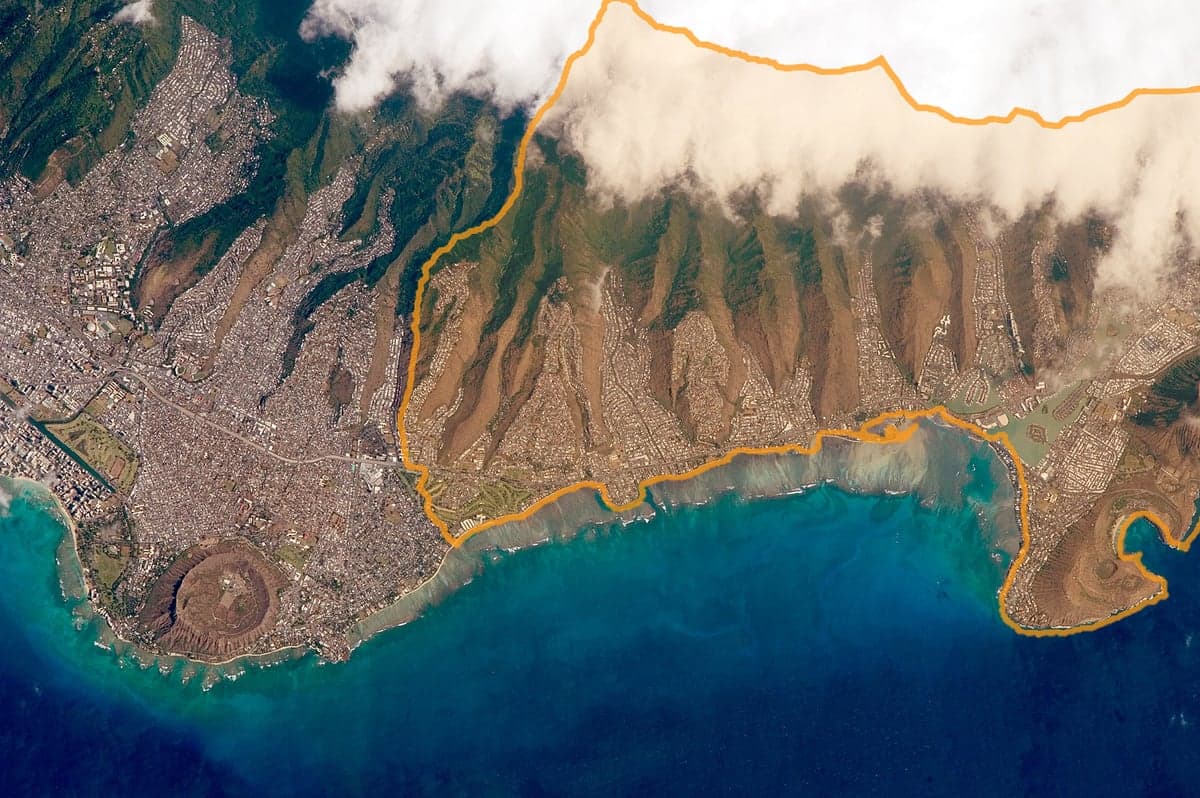
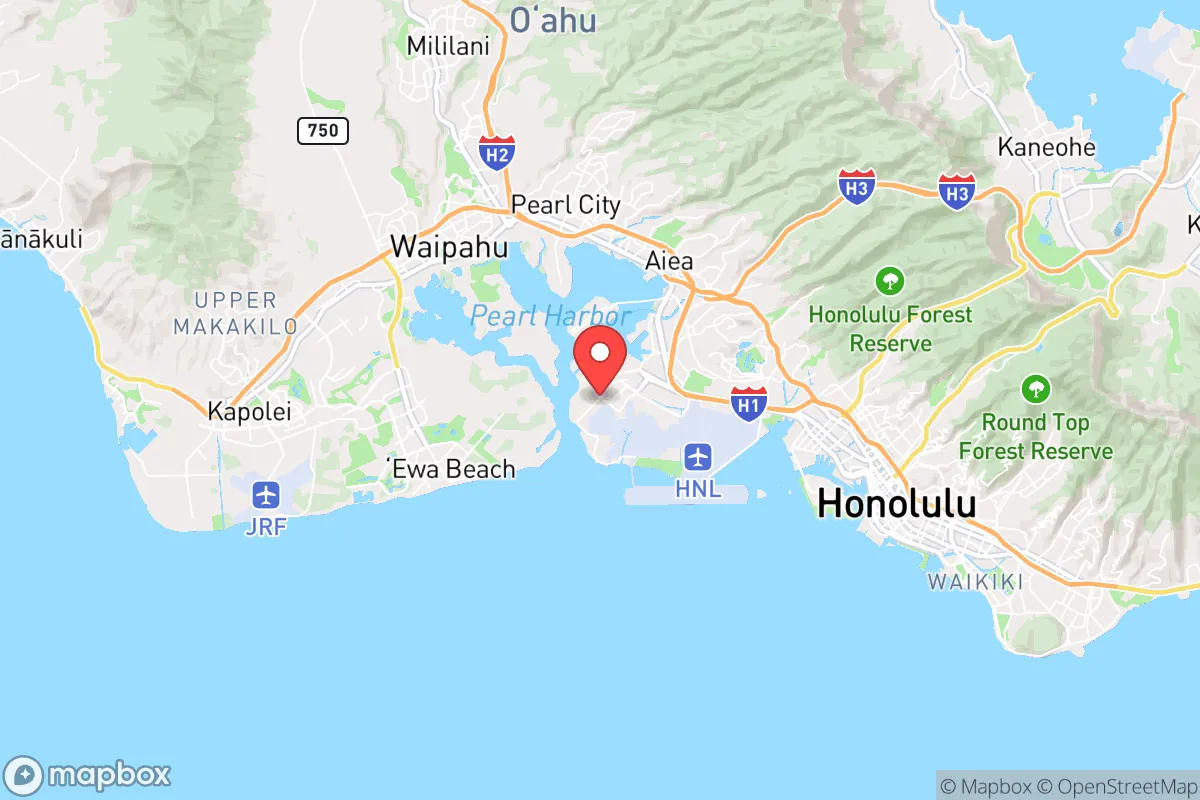
Photo: Wikipedia
Political ClimatePolitical Climate in East Honolulu, HI
District shown is the primary district for this city’s centroid. Cities may span multiple districts.
Local Political AnalysisPolitical Analysis of East Honolulu, HI
East Honolulu leans heavily Democratic, with a Cook PVI of D+13, meaning the area votes about 13 points more Democratic than the national average. This isn’t a new trend—it’s been building for decades, but the pace has accelerated since the mid-2010s. If you’re a conservative looking at this area, you’re seeing a place where the political center has shifted left, and not just on national issues. Local elections, school board races, and even neighborhood board meetings now tilt toward progressive candidates who push for higher taxes, stricter land-use regulations, and expanded government programs. The trajectory is clear: East Honolulu is becoming more uniformly blue, and the old moderate Democratic voices that once balanced things are fading fast.
How it compares
Drive 15 minutes west into urban Honolulu, and you’ll find a similar political vibe, though with more visible activism and homelessness advocacy that can feel overwhelming. Head north toward Kailua or Kaneohe, and you’re in even deeper blue territory—those areas have a stronger environmentalist and anti-development streak. The real contrast is if you go to the Leeward side, places like Kapolei or Ewa Beach, where you’ll find more working-class families and a slightly more mixed political outlook, though still solidly Democratic. For a conservative, the closest red-leaning area is probably up in the North Shore’s rural pockets or over on the Big Island’s Puna district, but that’s a long drive. Within East Honolulu itself, the old guard of fiscally conservative, socially moderate Democrats who ran things in the 1990s and 2000s has been replaced by a younger, more ideological cohort that sees government as the primary solution to everything from housing to traffic to beach access.
What this means for residents
For a conservative living here, the practical effects are real. Property taxes have crept up as the county funds more social programs and transit projects, and there’s constant pressure to adopt “complete streets” designs that reduce car lanes for bike paths—whether residents want them or not. Zoning and permitting have gotten tighter, making it harder to add an ohana unit or renovate without months of red tape. The local school board has pushed curriculum changes that emphasize social justice themes, which has some parents looking at private or charter options. Gun rights are essentially nonexistent in practical terms—Hawaii’s already strict laws are enforced even more rigorously here, with concealed carry permits nearly impossible to get. On the plus side, the area remains safe, clean, and well-maintained, with excellent parks and beaches, but that comes with a price: expect to pay more in taxes and fees for services you may not fully agree with. The long-term trend is toward more regulation, not less, so if you value personal freedom and limited government, you’ll feel the squeeze more each year.
Culturally, East Honolulu has a distinct “country town” feel that’s slowly being eroded by transplants from the mainland and younger locals who’ve adopted progressive values. The old plantation-era mindset of “live and let live” is giving way to a more activist, rule-heavy approach to community life. You’ll see more signs for climate initiatives, diversity training, and local food sovereignty programs than you would have a decade ago. The local Democratic party machine is strong, and independent or conservative voices are often sidelined in neighborhood discussions. If you’re considering a move here, know that you’ll be in a political minority, and that the local culture increasingly expects conformity on social and environmental issues. It’s still a beautiful place to live, but the political climate is something you’ll have to navigate carefully, especially if you value your privacy and your right to make your own choices without government interference.

State Political ClimatePolitical Climate in Hawaii
State Political AnalysisPolitical Environment in the State
Hawaii has been a one-party Democratic stronghold for decades, with Democrats controlling the governorship, both chambers of the legislature, and both U.S. Senate seats since the 1960s. The state’s overall partisan lean is roughly D+20 in presidential elections, but that masks a significant urban-rural split and a growing undercurrent of frustration with high taxes, housing costs, and government overreach. Over the past 10-20 years, the Democratic coalition has solidified, but the state has also seen a quiet shift toward more conservative-leaning voters in rural and suburban areas, particularly on the Big Island and Maui, as mainland transplants and native Hawaiians push back against progressive policies.
Urban vs. rural divide
The political map of Hawaii is starkly divided between the urban core of Honolulu on Oahu and the rest of the state. Honolulu and its suburbs—like Waikiki, Kailua, and Kaneohe—drive the state’s deep blue lean, with precincts routinely voting 70-80% Democratic. These areas are home to the state’s largest population centers, government workers, and tourism-dependent businesses, all of which benefit from the status quo of high taxes and heavy regulation. In contrast, the rural areas of the Big Island—Hilo, Puna, and Kona—and Maui County—Kahului, Kihei, and Hana—are more politically mixed. The Big Island’s Puna district, for example, has seen a surge in libertarian-leaning and conservative voters, particularly after the 2018 Kilauea eruption displaced many residents and exposed government inefficiency. The rural north shore of Oahu (Haleiwa, Waialua) also leans more conservative, driven by agricultural and military families. The key takeaway: if you’re looking for a more conservative environment, avoid Honolulu and stick to the outer islands or rural Oahu.
Policy environment
Hawaii’s policy environment is a textbook case of progressive overreach. The state has the highest combined state and local tax burden in the nation, with a general excise tax (GET) of 4.5% that applies to nearly everything, including services and groceries, and property taxes that, while lower than some mainland states, are paired with a crushing cost of living. The state legislature has passed a series of gun control laws that are among the strictest in the country, including a 2022 law requiring permits to purchase ammunition and a 2023 ban on so-called “ghost guns.” Education policy is dominated by a single statewide school district, the Hawaii Department of Education, which has been criticized for low test scores and a lack of local control. Healthcare is heavily regulated, with the state’s Prepaid Health Care Act mandating employer-provided insurance, but the system is strained by high costs and a shortage of providers. Election laws are relatively open, with same-day voter registration and mail-in voting, but the state has faced criticism for a lack of transparency in campaign finance. For a conservative, the policy environment is a red flag: high taxes, limited school choice, and a government that seems to prioritize regulation over freedom.
Trajectory & freedom
Hawaii is becoming less free by almost any measure. The state’s trajectory is toward more government control, not less. In 2023, the legislature passed Act 1, which expanded the state’s rent control powers and imposed new restrictions on short-term rentals like Airbnb, a move that hurt property owners and small businesses. The same year, Act 2 tightened gun laws further, requiring a 14-day waiting period for firearm purchases and banning the open carry of firearms in most public places. On the parental rights front, the state has been a leader in progressive education policies, including a 2022 law that requires public schools to teach “comprehensive” sex education starting in kindergarten, which has sparked backlash from conservative parents. Medical autonomy has been curtailed by strict vaccine mandates for school attendance and healthcare workers, which remain in place despite the end of the pandemic emergency. Property rights are under constant threat from the state’s powerful land use commission, which can block development and impose costly environmental reviews. The only bright spot for freedom advocates is the growing movement for local control and the rise of the Hawaii Libertarian Party, which has gained traction in rural areas. But overall, the trend is clear: more taxes, more regulation, and less personal liberty.
Civil unrest & political movements
Hawaii has a history of civil unrest, much of it tied to native Hawaiian sovereignty movements and environmental activism. The most visible flashpoint in recent years was the Mauna Kea protests (2019-2020), where thousands of activists—including many native Hawaiians and left-leaning environmentalists—blocked construction of the Thirty Meter Telescope, citing cultural and environmental concerns. This movement was a rare instance of left and right finding common ground, as some conservatives also opposed the project on property rights grounds. More recently, the state has seen protests over housing costs and homelessness, particularly in Honolulu’s Kakaako neighborhood, where a large homeless encampment was forcibly cleared in 2021. On the right, the Hawaii Republican Party has been largely marginalized, but there is a growing grassroots movement of conservative and libertarian activists focused on school choice, gun rights, and tax reform. Immigration politics are less contentious than on the mainland, but the state has a sanctuary policy that limits cooperation with federal immigration enforcement, which has frustrated some residents. Election integrity has been a minor issue, with no major controversies, but the state’s mail-in voting system has been criticized for a lack of voter ID requirements. A new resident would notice the visible homelessness and the tension between native Hawaiian activists and the state government, but the overall political climate is more passive than confrontational.
Projection
Over the next 5-10 years, Hawaii is likely to become even more progressive and expensive, driven by demographic shifts and in-migration patterns. The state’s population is aging and declining, with many native Hawaiians and working-class families moving to the mainland for lower costs and more freedom. In their place, wealthy mainland transplants—many from California and New York—are buying up property, driving up prices, and voting for the same progressive policies they left behind. The Democratic Party’s grip on power is unlikely to weaken, as the state’s single-district system and lack of competitive elections make it hard for conservatives to gain traction. However, there is a wild card: the growing frustration with housing costs and government inefficiency could fuel a populist backlash, similar to what we’ve seen in other blue states like California and New York. If the state’s economy continues to stagnate and the cost of living keeps rising, expect more residents to vote with their feet. For someone moving in now, the realistic expectation is that Hawaii will remain a high-tax, high-regulation state with limited personal freedoms, but with pockets of conservative resistance in rural areas and on the outer islands.
Bottom line for a new resident: If you’re a conservative or libertarian, Hawaii is a tough place to live unless you’re willing to fight for your rights and pay a premium for the privilege. The state’s political climate is hostile to gun ownership, school choice, and property rights, and the tax burden is crushing. Your best bet is to look at rural areas on the Big Island or Maui, where the political culture is more independent and the cost of living is slightly lower. But even there, you’ll be swimming against a strong progressive tide. If you value personal freedom and low taxes, Hawaii is probably not the right fit—consider a state like Texas or Florida instead. But if you’re willing to accept the trade-offs for the natural beauty and unique culture, just know what you’re getting into: a beautiful but increasingly unfree state.
* Values derived from national, state, county, city and local statistics and may differ in a specific area. Last updated: 2026-04-24T12:49:34.000Z
Narrative content on this page is AI-generated and may contain mistakes. Verify any details that matter before acting on them.
ReloMaps may earn a commission from affiliate links at no extra cost to you.

