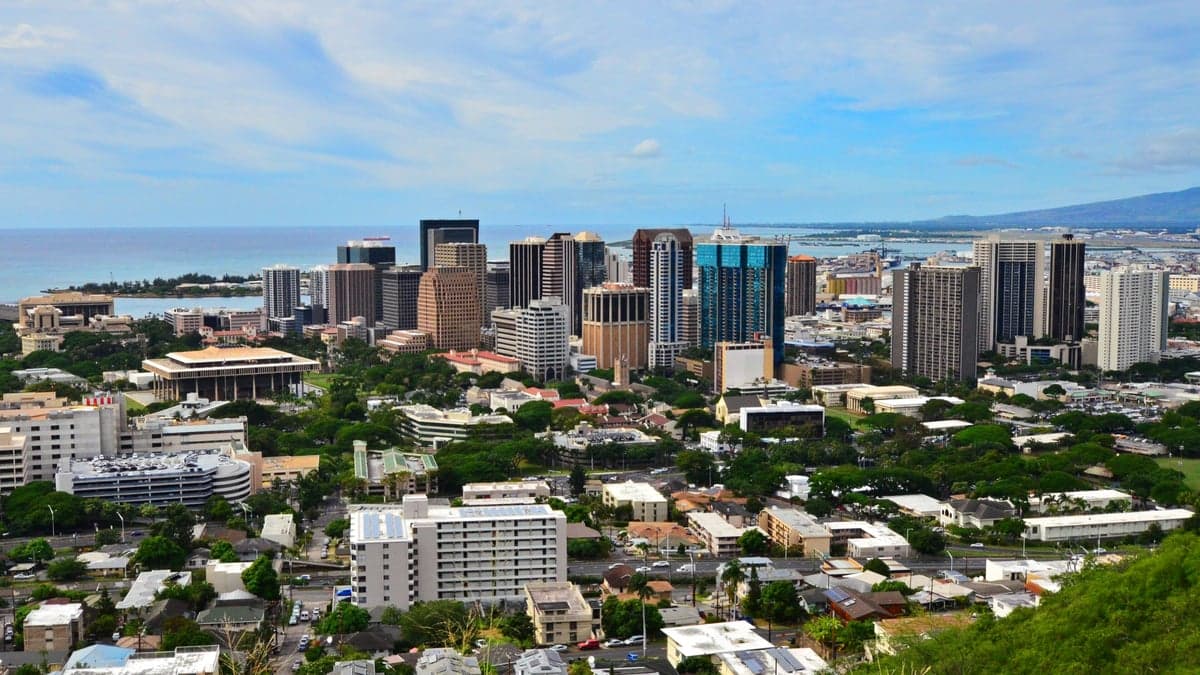
Photo: Wikipedia
Quality of Life in Honolulu County
A livable area that tracks near national norms for affordability, walkability, and neighborhood health.
What does Quality of Life tell us?
Quality of Life measures an area by evaluating factors like cost of living, nearby amenities, country club access, airport proximity, socioeconomic signals and neighborhood character. For large states, this is a general average — quality of life can vary dramatically between metro areas, suburbs, and rural communities within the same state.
What does this tell us?
Quality of Life measures an area by evaluating factors like cost of living, nearby amenities, country club access, airport proximity, socioeconomic signals and neighborhood character. For large states, this is a general average — quality of life can vary dramatically between metro areas, suburbs, and rural communities within the same state.
Cost of Living
130% above national average
59%
The Real Cost of Living in Honolulu County for 2026
| Tier | Individual | Family (4) |
|---|---|---|
| Survival | $33k | $62k |
| Comfortable | $119k | $176k |
| Luxury | $175k+ | $271k+ |
| Elite (Top 5%) | $206k+ | $319k+ |
Quality-of-Life Analysis
Honolulu County, coterminous with the island of Oʻahu, offers a quality-of-life spectrum that ranges from the dense, high-rise urban core of Honolulu to the rural, agricultural valleys of the North Shore and the windward coast. The county draws a diverse mix of people: professionals and students gravitate to the urban core for jobs and education, while families, surfers, and those seeking a slower pace are pulled toward smaller towns like Kailua and Haleʻiwa. This single county encapsulates the full Hawaiian experience, from 24-hour city energy to plantation-town quiet, all within a 45-minute drive.
Largest town(s) & population centers
The primary population center is Honolulu, the state capital and economic engine, home to roughly 350,000 residents. Daily life here is defined by high-density living in neighborhoods like Waikīkī, Kakaʻako, and Ala Moana, with a walkable urban core, a robust bus system (TheBus), and a concentration of jobs in government, tourism, and the military. The average commute across the county is 27 minutes, though Honolulu residents often face shorter trips, while those commuting from the suburbs endure longer drives. The secondary hub is Kāneʻohe on the windward side, a more suburban center with a major shopping mall, Windward Community College, and a strong military presence due to nearby Marine Corps Base Hawaii. Pearl City and ʻAiea, located between Honolulu and the Leeward Coast, form a continuous suburban corridor with mid-rise apartments and strip malls, appealing to families seeking proximity to Pearl Harbor and the H-1 freeway.
Smaller towns & rural pockets
Beyond the urban core, Honolulu County contains distinct small towns and rural areas that feel worlds apart. Haleʻiwa on the North Shore is a historic plantation town turned surf mecca, with a population under 4,000, where daily life revolves around food trucks, boutique shops, and world-famous surf breaks like Waimea Bay and Pipeline. Kailua, on the windward coast, is an affluent beach town of about 40,000, known for its white-sand beaches, kayaking to the Mōkapu peninsula, and a tight-knit community feel, though it has become increasingly expensive. Further north, Lāʻie is a rural community anchored by Brigham Young University–Hawaii and the Polynesian Cultural Center, offering a slower, church-centered lifestyle. On the Leeward Coast, Waiʻanae and Mākaha are more rural and less developed, with a higher proportion of Native Hawaiian residents, limited retail, and a reputation for being more affordable but also more isolated, with longer commutes into Honolulu.
Cost & lifestyle range
The cost of living across Honolulu County is uniformly high, with a cost-of-living index of 230 (more than double the U.S. average), but the spread between the most and least expensive areas is significant. At the high end, Kāhala and Portlock in East Honolulu boast median home values well above the county's $873,000 average, with oceanfront estates exceeding $5 million, and a lifestyle centered on private clubs, fine dining, and elite schools. At the more accessible end, Waiʻanae and Nānākuli on the Leeward Coast have median home values closer to $600,000, though inventory is limited and many homes are older. Median rent across the county is $2,054, but in Waikīkī, a studio apartment often rents for $1,800, while a two-bedroom in Kailua can exceed $3,500. The lifestyle range is equally broad: urban dwellers in Honolulu enjoy 24/7 amenities, nightlife, and cultural institutions like the Bishop Museum, while rural residents on the North Shore or Leeward Coast prioritize outdoor recreation, community events, and a slower pace, often sacrificing access to jobs and shopping.
Who thrives in Honolulu County? Those who value year-round tropical climate, world-class beaches, and a blend of urban and rural living will find the county uniquely satisfying. Professionals and students who can afford the high housing costs and embrace the density of Honolulu will benefit from career opportunities and cultural diversity. Families and retirees seeking a quieter, community-oriented life will find their niche in towns like Kailua, Haleʻiwa, or Lāʻie, provided they can manage the commute and higher prices. The county is not for those seeking a low cost of living or sprawling suburban lots, but for those who prioritize access to nature, ocean recreation, and a distinct island culture, it offers an unmatched quality-of-life spectrum within a single island.

Crime in Honolulu County
Generally safer than 64% of comparable U.S. locations.
Violent CrimeViolent Crime Analysis
Property CrimeProperty Crime Analysis
Crime Analysis
Honolulu County, which encompasses the entire island of Oahu, presents a mixed safety profile: its violent crime rate of 200.2 per 100,000 residents is notably lower than the national average, but its property crime rate of 1,586.9 per 100,000 is significantly higher, driven largely by theft and vehicle break-ins in tourist-heavy zones. The county’s overall safety picture is heavily influenced by the concentration of crime in Honolulu’s urban core and the contrasting tranquility of suburban and rural communities like Kailua, Kaneohe, and Mililani. While the island benefits from a strong police presence and community-oriented policing, residents and visitors alike must remain vigilant against property crime, which is the most common public safety concern.
Crime in context
Honolulu County’s violent crime rate of 200.2 per 100,000 is roughly 30% lower than the national average of about 380 per 100,000, and it also sits below the Hawaii state average, which is itself among the lowest in the nation. However, the property crime rate of 1,586.9 per 100,000 is nearly 20% higher than the national average of roughly 1,340 per 100,000, placing Oahu in a higher-risk category for theft, burglary, and motor vehicle theft. This disparity reflects the unique pressures of a dense island economy heavily dependent on tourism: areas like Waikiki, Ala Moana, and downtown Honolulu see elevated property crime due to transient populations and high-value targets. By contrast, the state’s other counties—Hawaii County, Maui County, and Kauai County—all report lower property crime rates, underscoring Honolulu’s role as the state’s crime hotspot for non-violent offenses.
What residents experience
For most residents, daily life in Honolulu County is safe, but property crime is a persistent nuisance. Car break-ins and package thefts are common in neighborhoods near major shopping corridors, such as Kapolei, Pearl City, and the University of Hawaii at Manoa area. Violent crime is far less frequent but tends to cluster in specific districts: the Kalihi-Palama and Waianae Coast areas report higher rates of assault and robbery, while the more affluent communities of Kailua, Hawaii Kai, and Mililani enjoy violent crime rates well below the county average. The Honolulu Police Department (HPD) maintains a visible presence, but response times can vary—urban areas like downtown Honolulu see faster service than rural stretches of the North Shore or the Leeward Coast. The progressive lean of the city’s judiciary, including the Honolulu District Court and the Office of the Prosecuting Attorney, has drawn criticism from some residents who argue that lenient sentencing for property and drug offenses contributes to repeat offending, particularly in areas like Chinatown and Waikiki where quality-of-life crimes are most visible.
Neighborhood-level variation
Safety in Honolulu County varies dramatically by neighborhood, with a clear divide between the urban core and suburban/exurban communities. The safest areas by violent crime metrics include Mililani, Kapolei (Ewa Beach side), and Kaneohe, where family-oriented subdivisions and gated communities keep crime rates low. In contrast, the Waianae Coast and Nanakuli consistently report the highest violent crime rates on the island, driven by socioeconomic challenges and limited police resources. Property crime is more evenly distributed but spikes in tourist corridors: Waikiki alone accounts for a disproportionate share of theft and fraud incidents. For those considering relocation, neighborhoods like Kailua and Hawaii Kai offer a strong balance of low crime and community amenities, while buyers should exercise caution in areas with high rental turnover or proximity to major transit hubs like the Ala Moana Center. The county’s reliance on a progressive district attorney’s office, which emphasizes diversion programs over incarceration, means that property crime offenders often face minimal consequences, a factor that long-term residents cite as a growing concern for neighborhood safety.
* Values derived from national, state, county, city and local statistics and may differ in a specific area. Last updated: 2026-05-12T03:12:14.000Z
Narrative content on this page is AI-generated and may contain mistakes. Verify any details that matter before acting on them.
ReloMaps may earn a commission from affiliate links at no extra cost to you.

