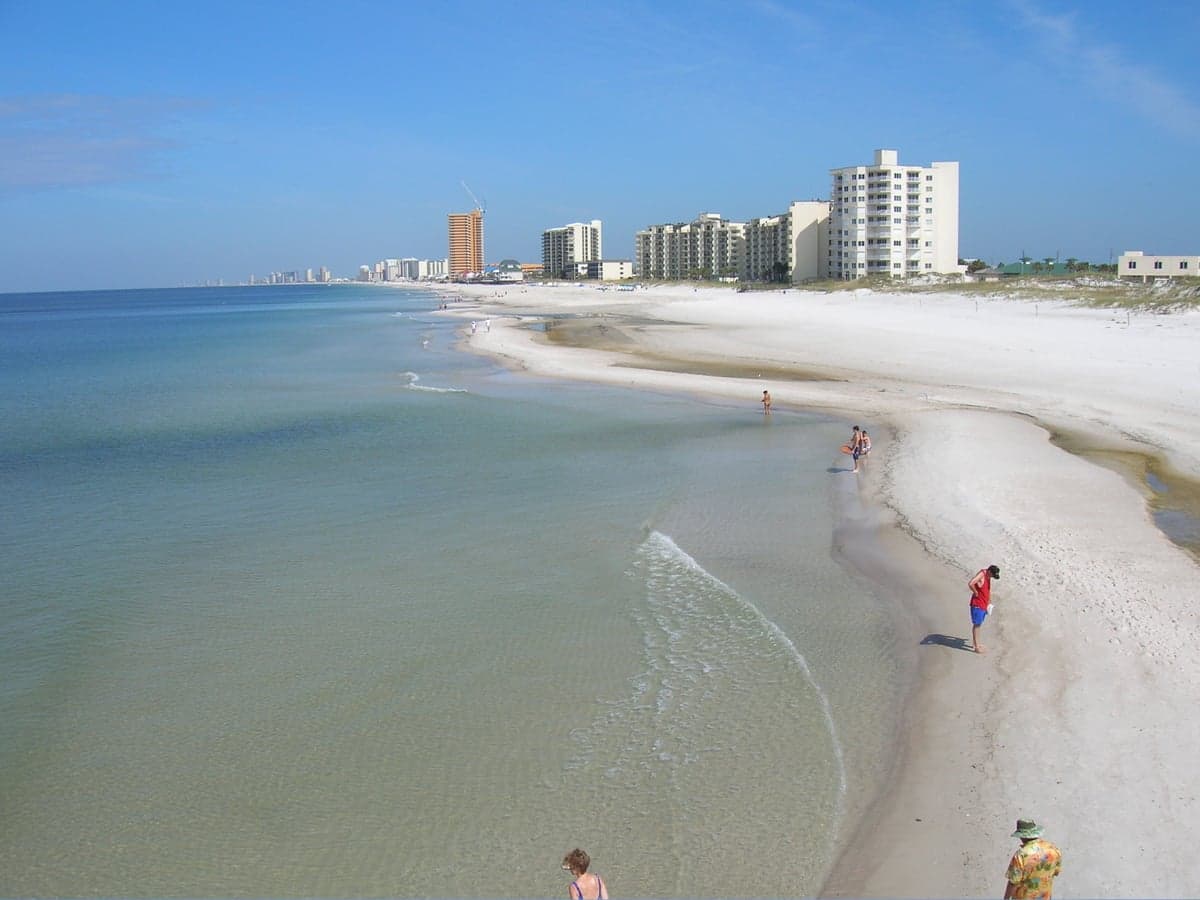
Photo: Wikipedia
Political ClimatePolitical Climate in Panama City Beach, FL
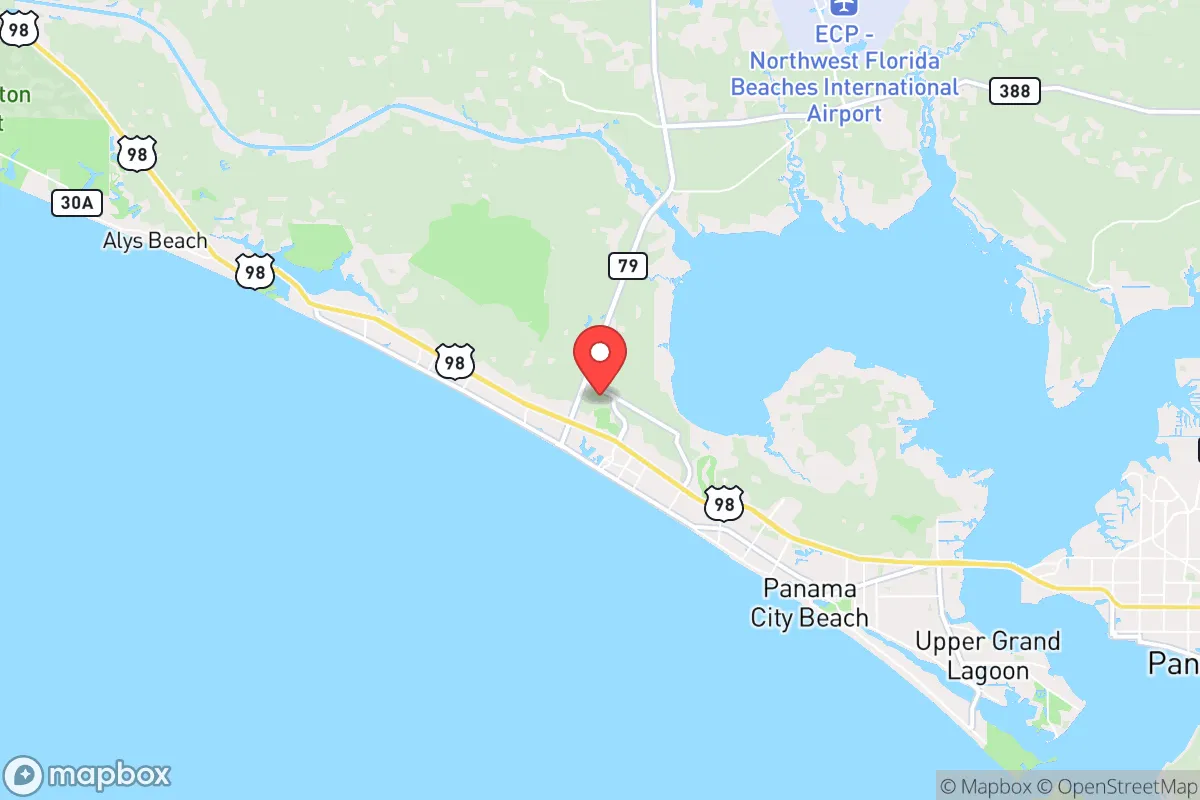
District shown is the primary district for this city’s centroid. Cities may span multiple districts.
Local Political AnalysisPolitical Analysis of Panama City Beach, FL
Panama City Beach has long been a reliably conservative community, and that hasn’t changed much over the years. The area’s Cook Partisan Voting Index (PVI) of R+8 puts it three points to the right of Florida as a whole, which sits at R+5. That might not sound like a huge gap, but when you live here, you feel it in everything from local ordinances to the way folks talk about taxes and property rights. The political trajectory here has been steady—no wild swings leftward, just a consistent, grounded preference for limited government and personal responsibility.
How it compares
Compared to the rest of Florida, Panama City Beach is noticeably more conservative. While the state overall has trended slightly more Republican in recent cycles, the Panhandle has always been the bedrock. Drive an hour east to Tallahassee, and you’ll find a much more mixed political scene—college town energy, more progressive city council votes, and a general tolerance for bigger government programs. Head west toward Pensacola, and you’re back in similar territory, but Panama City Beach feels more insulated from the coastal liberal drift you see in places like Miami or Tampa. The local county commission here rarely entertains ideas that would expand government reach into daily life—zoning fights, mask mandates, or new taxes usually get shut down fast. That’s a big reason why people move here from more regulated parts of the state.
What this means for residents
For someone living in Panama City Beach, the political climate translates into fewer headaches. Property taxes stay relatively low, business regulations are light, and there’s little appetite for the kind of progressive social engineering you see in bigger cities. You won’t find the same push for “equity” programs or heavy-handed environmental restrictions that can choke small businesses in other parts of Florida. The local school board and city council tend to focus on practical stuff—infrastructure, public safety, keeping the beaches clean—rather than diving into culture war battles. That said, there’s a growing concern among longtime residents about outside money and new development bringing in people who might want to change the character of the place. So far, the conservative majority has held the line, but it’s something to keep an eye on as the area grows.
Culturally, Panama City Beach is still very much a “live and let live” kind of place, but with a strong undercurrent of traditional values. You’ll see church parking lots full on Sunday mornings, and the local gun culture is alive and well—open carry is common, and nobody bats an eye. The biggest policy distinction from the rest of Florida is the local resistance to state-level mandates that feel like overreach. For example, during the COVID years, this area was among the quickest to push back on lockdowns and mask requirements, treating them as infringements on personal choice rather than necessary precautions. That independent streak is what keeps the political climate here stable and predictable. If you’re looking for a place where government stays out of your business and the politics match the pace of life—slow, steady, and free—Panama City Beach delivers.

State Political ClimatePolitical Climate in Florida
State Political AnalysisPolitical Environment in the State
Florida is a solidly Republican state with a Cook PVI of R+5, but calling it a simple red state misses the real story. The dominant coalition is a mix of conservative retirees, military veterans, and a growing number of Hispanic voters, especially in the southern and central parts of the state. Over the last 10-20 years, Florida has shifted from a classic swing state — famously deciding the 2000 election by 537 votes — to a reliably right-leaning one, with Republicans winning every statewide race since 2012 and holding supermajorities in both legislative chambers. The big change came after 2020, when the state saw a massive influx of new residents from blue states, many of whom were fleeing lockdowns, high taxes, and crime, and they brought their conservative voting habits with them.
Urban vs. rural divide
The political map of Florida is stark. The major metros — Miami-Dade, Broward (Fort Lauderdale), and Orange County (Orlando) — are Democratic strongholds, but even those are shifting. Miami-Dade, once a blue bastion, has been trending red for years; in 2024, Donald Trump won it by a narrow margin, a seismic shift driven by Cuban-American and Venezuelan voters who are fiercely anti-socialist. Palm Beach County is a purple battleground, with wealthy coastal enclaves like Palm Beach proper leaning right while inland areas like West Palm Beach stay blue. The rural Panhandle — places like Panama City, Pensacola, and the sprawling counties around Tallahassee — is deep red, with margins often exceeding 70% Republican. The I-4 corridor, stretching from Tampa to Daytona Beach, is the classic swing region, but even there, suburbs like Lakeland and Ocala have hardened into GOP strongholds. The real story is the exurbs: fast-growing counties like St. Johns (St. Augustine) and Collier (Naples) are among the most conservative in the nation, driven by retirees and families seeking lower taxes and less government interference.
Policy environment
Florida’s policy environment is aggressively pro-freedom in the traditional sense. There is no state income tax, which is a massive draw for high-earners and business owners. Property taxes are moderate, and the state has a homestead exemption that caps annual increases for primary residences. The regulatory posture is light: Florida is a right-to-work state, has no state-level minimum wage above the federal floor (though voters passed a $15 minimum by 2026 via ballot initiative), and has streamlined permitting for construction and business licensing. Education policy is a major battleground: Governor Ron DeSantis pushed through the Parental Rights in Education Act (HB 1557, often called the "Don't Say Gay" law by critics) and the Stop WOKE Act (HB 7), which restricts critical race theory and gender ideology instruction in schools and workplaces. School choice is robust, with universal Education Savings Accounts available to all students. Healthcare policy is mixed: Florida did not expand Medicaid under the ACA, and the state has a competitive private insurance market. Election laws were tightened after 2020, with stricter voter ID requirements, limits on drop boxes, and a ban on ballot harvesting. The state also passed a law (SB 7050) that makes it a felony for non-citizens to vote, with automatic voter registration purges. For a conservative, this is a state that actively pushes back against federal overreach and cultural leftism.
Trajectory & freedom
Florida is becoming more free in many respects, but the trajectory is not uniform. On gun rights, the state is a "shall-issue" concealed carry state, and in 2023, DeSantis signed permitless carry (HB 543) into law, allowing any legal gun owner to carry concealed without a permit. This was a major win for Second Amendment advocates. On parental rights, the state has been a national leader: the Parental Rights in Education Act and the expansion of school choice give families real power over their children’s education. On speech, the state passed the "Stop Social Media Censorship" law (SB 7072), which restricts platforms from de-platforming political candidates, though it’s tied up in court. On medical autonomy, Florida banned COVID-19 vaccine mandates for private employers and schools, and it passed a law (SB 1580) prohibiting gender transition procedures for minors. Property rights are strong, with no state-level rent control and a robust "right to farm" law. However, there are concerns: the state has a powerful executive branch, and some conservatives worry about the use of state power against local governments (e.g., the state’s fight with Disney over the "Don't Say Gay" law). The overall trend is toward expanding personal liberty, but with a strong hand from Tallahassee.
Civil unrest & political movements
Florida has seen its share of political flashpoints, but they are less frequent than in deep blue states. The most visible recent unrest was during the 2020 George Floyd protests, which saw significant demonstrations in Miami, Orlando, and Jacksonville, but the state’s Republican leadership quickly cracked down with tough-on-crime rhetoric and legislation. The "Defund the Police" movement never gained traction here; instead, the state passed the "Combating Violence, Disorder and Looting and Law Enforcement Protection Act" (HB 1), which enhanced penalties for rioting and protected officers from lawsuits. Immigration politics are a constant: Florida passed the toughest anti-sanctuary city law in the nation (SB 1718), which requires businesses with 25+ employees to use E-Verify, bans local governments from issuing ID cards to illegal immigrants, and mandates that hospitals collect immigration status data. This has led to some labor shortages in agriculture and construction, but it’s popular with the base. Election integrity remains a hot topic: the state’s 2020 election was widely seen as clean, but the 2022 and 2024 cycles saw ongoing battles over mail-in voting and drop boxes. Organized activist movements are strong on both sides: the Florida Democratic Party is weak, but progressive groups like the Florida Rising coalition are active in urban areas. On the right, groups like Moms for Liberty and the Florida Family Action are highly organized and influential. A new resident will notice that political conversations are common and often heated, but the state’s culture is generally live-and-let-live, with a strong emphasis on personal responsibility.
Projection
Over the next 5-10 years, Florida is likely to become even more conservative. The in-migration from blue states shows no signs of slowing: net domestic migration has been over 300,000 people per year, and these newcomers are disproportionately conservative-leaning, especially those from New York, California, and Illinois. The Hispanic vote, particularly among Cuban-Americans and Venezuelans, is solidifying as a Republican bloc. The Democratic Party in Florida is in disarray, with no clear statewide leader and a shrinking base in rural and suburban areas. However, there are risks: the state’s rapid growth is straining infrastructure, especially in Miami, Tampa, and Orlando, and housing costs are rising fast. This could create a backlash among younger voters who feel priced out. Climate change is a long-term concern, with rising sea levels threatening coastal property values, but this is not yet a major political issue. The biggest wild card is the national political environment: if the GOP shifts left on cultural issues, Florida could moderate. But as of 2026, the state is on a trajectory to become a solidly red, low-tax, high-freedom haven for conservatives.
For a new resident, the bottom line is this: Florida offers a political environment that actively protects your rights to keep and bear arms, choose your child’s school, and keep more of your own money. You will find a state that pushes back against federal overreach and cultural radicalism. But you should also expect a high cost of living in desirable areas, a hot and humid climate, and a political culture that is unapologetically conservative. If you value personal liberty and limited government, Florida is one of the best places in the country to call home.
* Values derived from national, state, county, city and local statistics and may differ in a specific area. Last updated: 2026-05-13T17:02:50.000Z
Narrative content on this page is AI-generated and may contain mistakes. Verify any details that matter before acting on them.
ReloMaps may earn a commission from affiliate links at no extra cost to you.

