 Popular
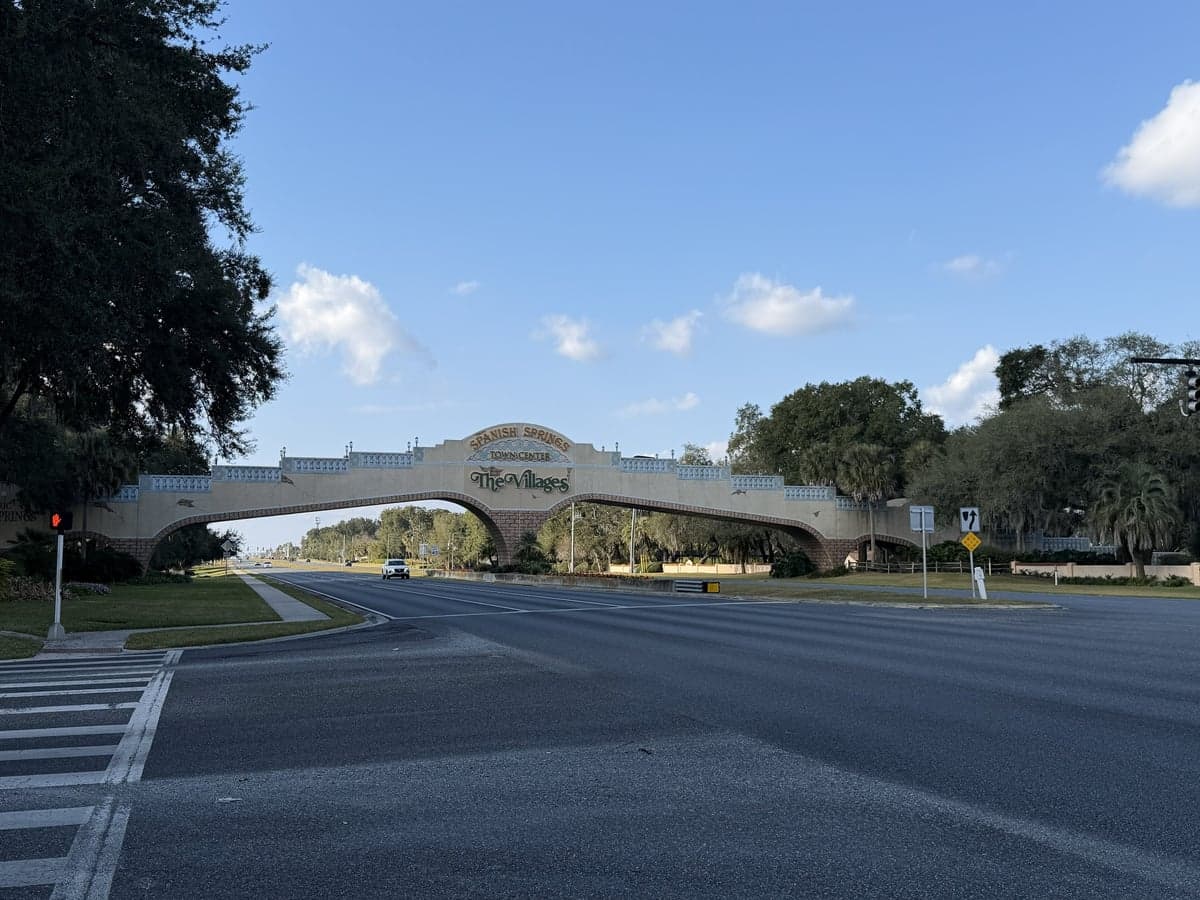
Photo: Wikipedia
Political ClimatePolitical Climate in The Villages, FL
District shown is the primary district for this city’s centroid. Cities may span multiple districts.
Local Political AnalysisPolitical Analysis of The Villages, FL
The Villages leans heavily conservative, and that’s not just a talking point—it’s baked into the numbers. The area carries a Cook PVI of R+8, meaning it votes about eight points more Republican than the national average, and in practice, local precincts often run even redder. If you’ve been around here long enough, you remember when it was a quiet retirement haven where folks just wanted to golf and mind their own business. Now, with more people moving in from blue states, you can feel the political temperature shifting—not enough to flip anything, but enough to make you pay attention. The trajectory is still solidly conservative, but there’s a creeping undercurrent of progressive influence that has some of us watching the local elections a little closer.
How it compares
Drive 30 minutes south to Ocala, and you’ll find a similar conservative vibe, though it’s a bit more working-class and less polished. Head east toward Orlando, and the contrast is stark—Orange County is a blue island where government overreach in things like mask mandates and zoning regulations is the norm. The Villages itself sits in Sumter County, which is one of the most Republican counties in Florida, but the surrounding towns like Leesburg and Wildwood are starting to see more mixed demographics. What sets The Villages apart is the sheer density of politically active retirees who show up to vote and aren’t shy about calling out anything that smells like progressive overreach. You don’t see that same energy in, say, Mount Dora, which has a more artsy, laid-back crowd that’s friendlier to left-leaning ideas.
What this means for residents
For folks living here, the political climate directly shapes daily life in ways that matter. Property taxes stay low because the county commission isn’t keen on bloated government programs. The homeowners’ association rules are strict, but they’re enforced with a light touch—unless you’re trying to push something like a pride flag or a political sign that doesn’t fit the neighborhood’s character. That’s where the tension shows up: as new residents arrive from places like New York or California, they sometimes bring expectations of more government involvement in personal choices, from lawn decorations to what books are in the local library. So far, the old guard has held the line, but it’s a constant battle. If you value personal freedom—like the right to carry a firearm without a permit, which Florida now allows—you’ll feel at home here. But if you’re worried about the county board getting packed with activists who think they know better than you, keep an eye on the next few election cycles.
Culturally, The Villages is its own little world. You’ve got over 100 golf courses, town squares with live music every night, and a social scene that revolves around pickup trucks and American flags. There’s no income tax in Florida, and the local government mostly stays out of your business—unless you’re breaking a rule about your fence height. The biggest policy distinction is the lack of any serious push for public transit or high-density housing, which keeps the area feeling spacious and private. Some folks worry that as the population grows, the county will cave to state or federal pressure to adopt more progressive housing mandates. For now, though, The Villages remains a place where you can live your life without a lot of bureaucratic nonsense, and that’s exactly how most of us like it.

State Political ClimatePolitical Climate in Florida
State Political AnalysisPolitical Environment in the State
Florida has transformed from a classic swing state into a solidly Republican-leaning powerhouse over the past decade, with a partisan lean of roughly +3 to +5 points in statewide races as of 2026. The dominant coalition is a fusion of conservative retirees, working-class Hispanics (especially Cubans and Venezuelans in Miami-Dade), and families fleeing high-tax states like New York and California. Over the last 20 years, the state has shifted rightward by about 10 points, driven by massive in-migration from blue states and a GOP that has aggressively consolidated power under Governor Ron DeSantis. This isn't your grandfather's Florida — it's a state that has deliberately positioned itself as a red-state alternative to the Northeast and West Coast.
Urban vs. rural divide
The political map of Florida is a tale of three distinct regions. The I-4 corridor — running from Tampa through Orlando to Daytona Beach — remains the state's ultimate battleground, with suburbs like Lakeland and Winter Garden trending red while the urban cores of Tampa and Orlando stay blue. Miami-Dade County, once a Democratic stronghold, has flipped dramatically: in 2020, Trump lost it by only 7 points after Hillary Clinton won it by 29 in 2016. This shift is driven by Cuban and Venezuelan voters in Hialeah and Doral who are viscerally anti-socialist. Meanwhile, the Panhandle — places like Pensacola, Panama City, and Tallahassee's surrounding counties — is deep red, with some precincts voting 80%+ Republican. The rural interior, from Ocala to the Everglades, is similarly conservative. The only reliably blue strongholds are the urban cores of Miami, Fort Lauderdale, and Orlando, plus the college town of Gainesville. The suburbs, especially in Jacksonville and Tampa, have moved right over the past decade.
Policy environment
Florida's policy environment is a conservative's dream, with a no state income tax that attracts high-earners and businesses alike. The regulatory posture is light-touch: occupational licensing has been slashed, and the state has a right-to-work law that keeps unions weak. Education policy is a flashpoint: the state passed the Parental Rights in Education Act (HB 1557, the "Don't Say Gay" law) in 2022, which restricts classroom instruction on sexual orientation and gender identity through third grade. School choice is robust, with the Family Empowerment Scholarship program giving parents taxpayer-funded vouchers for private or homeschool options. Healthcare is mixed: Florida did not expand Medicaid under the ACA, but it has a competitive insurance market. Election laws were tightened in 2021 (SB 90), requiring voter ID, limiting drop boxes, and restricting mail-in ballot requests — a response to 2020's controversies. Property taxes are relatively high (around 0.8-1.0% of assessed value), but there's a $50,000 homestead exemption. The state also preempted local gun laws, ensuring uniform carry rights statewide.
Trajectory & freedom
Florida is unequivocally becoming more free in the conservative sense — meaning lower taxes, less regulation, and more parental control. The 2023 session saw the Permitless Carry law (HB 543), allowing concealed carry without a permit, and the Live Local Act, which preempted local zoning to fast-track affordable housing. The Stop WOKE Act (HB 7) banned critical race theory in schools and workplace diversity training, though parts were struck down in court. On medical freedom, DeSantis signed a ban on COVID-19 vaccine mandates for private employers and schools. Property rights were strengthened with the Private Property Rights Protection Act, limiting eminent domain. However, the state has also expanded government power in some areas: the Disney special district dissolution in 2022 was a clear use of state power to punish a political opponent, and the state's aggressive preemption of local ordinances (from plastic straw bans to rent control) shows a top-down approach that some libertarians find concerning. Overall, the trajectory is toward more individual liberty on guns, education, and medical choice, but with a strong hand from Tallahassee.
Civil unrest & political movements
Florida has seen relatively little civil unrest compared to blue states, but it's not without flashpoints. The 2020 George Floyd protests in Miami, Orlando, and Jacksonville were largely peaceful, though there were isolated looting incidents. The state's response was aggressive: DeSantis created the Election Integrity Unit and the Office of Election Crimes and Security, which has prosecuted a handful of voter fraud cases. Immigration politics are front and center: Florida passed the SB 1718 in 2023, which requires businesses with 25+ employees to use E-Verify, bans local "sanctuary" policies, and makes it a felony to transport undocumented immigrants into the state. This has created a tense atmosphere in agricultural areas like Immokalee and Homestead. The Moms for Liberty movement, born in Brevard County, has become a national force, pushing for school board conservative majorities. On the left, the Dream Defenders and ACLU of Florida organize protests against the state's policies, but they lack the numbers to shift the needle. Election integrity remains a hot topic: the 2022 midterms saw record turnout with no major issues, but the state's strict laws have drawn lawsuits from voting rights groups.
Projection
Over the next 5-10 years, Florida will likely become more Republican and more conservative. The in-migration from blue states shows no signs of slowing: roughly 1,000 people move to Florida per day, and they're disproportionately conservative-leaning families and retirees. The Hispanic vote, especially in Miami-Dade, will continue trending right as younger Cuban and Venezuelan voters prioritize economic freedom over identity politics. The I-4 corridor's suburbs will keep flipping red, while the urban cores of Miami and Orlando will remain blue but shrink in relative influence. The biggest wildcard is climate change: rising sea levels and hurricane intensity could eventually slow growth in coastal areas like Miami Beach and Fort Myers, but for now, the state's low taxes and pro-business climate are a powerful draw. Expect more preemption of local progressive ordinances, continued expansion of school choice, and a hardening of the state's immigration stance. The only thing that could shift the trajectory is a major demographic change — like a sudden influx of liberal remote workers — but that seems unlikely given the state's current branding.
For a new resident, the bottom line is this: Florida offers a high degree of personal freedom on taxes, guns, education, and medical choice, but it's not a libertarian paradise — the state government is assertive and willing to use its power to enforce conservative norms. If you value low taxes, parental rights, and a business-friendly environment, you'll feel at home. If you're looking for a place where the government stays out of your life entirely, you'll find some contradictions — like the state's ban on local rent control or its preemption of local gun laws. But compared to New York, California, or Illinois, Florida is a breath of fresh air for anyone tired of high taxes and overregulation. Just be prepared for hot summers, hurricane season, and a political culture that's unapologetically red.
* Values derived from national, state, county, city and local statistics and may differ in a specific area. Last updated: 2026-04-24T03:56:38.000Z
Narrative content on this page is AI-generated and may contain mistakes. Verify any details that matter before acting on them.
ReloMaps may earn a commission from affiliate links at no extra cost to you.

